When Should You Start Reading Bedtime Stories? Earlier Than You Think
Wondering when to start reading bedtime stories to your baby? The answer might surprise you — and it has everything to do with connection, not comprehension.
7 min read
When Should You Start Reading Bedtime Stories? Earlier Than You Think
There's a question that crosses the mind of almost every new parent, usually in the early weeks when the baby is tiny and sleepy and seems blissfully unaware of everything happening around them:
Is there any point reading to them yet?
It's a fair question. Your newborn cannot follow a plot. They cannot understand what a bear, or a moon, or a runaway train actually is. They cannot ask for their favourite book or point at pictures. In those earliest weeks, it can feel like reading aloud is something of a one-sided performance — you, earnestly narrating a tale about a caterpillar, to an audience of one who is mostly interested in milk and warmth.
But here's what the science says, and here's what parents who've been through it know in their bones: the answer is from birth, or even before.
What's Happening in That Tiny Brain
A newborn's brain is not a blank slate. It arrives in the world already shaped by months of listening.
From around 25 weeks of pregnancy, a developing baby can hear sounds from outside the womb — muffled and filtered through fluid and tissue, but present. By the third trimester, they've been listening to voices for weeks. Studies have found that newborns prefer their mother's voice above all others within hours of birth, and that they already show a preference for stories and songs they heard in utero.
That's not a metaphor. That's neuroscience.
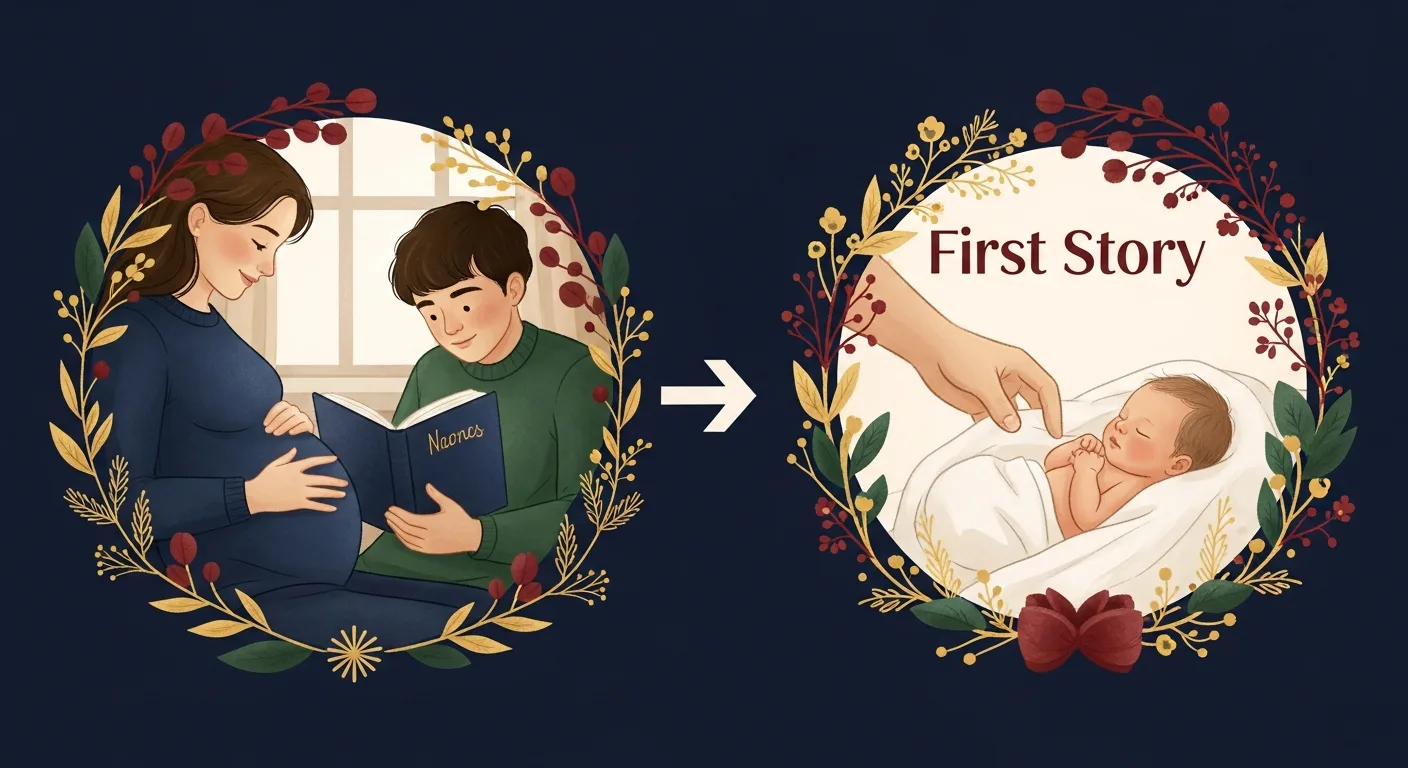
What this means practically is that the voice you use to read a story to your unborn baby at 32 weeks is not being wasted. It's being filed away. It's becoming familiar. It's becoming home.
And the moment your baby is born, that familiarity becomes the foundation of everything.
The Womb-to-World Transition
Birth is, by any measure, an enormous shift. One moment: warmth, containment, constant sound. The next: light, cold air, an overwhelming array of new sensations.
In those first hours, days, and weeks, familiar sounds are profoundly soothing. Your heartbeat. Your smell. Your voice.
When you read to a newborn, you're not teaching them vocabulary. You're doing something more fundamental: you're telling them you're here, you're safe, the world is knowable. The rhythm of a story — even one they can't understand — is a kind of lullaby. It says: this is my voice, and my voice means you are loved.
That's why it's never too early to start. And that's why bedtime story tips for new parents almost universally begin with the same advice: don't wait until they "get it." Start now.
Language Exposure: The Research Behind the Magic
The case for early reading isn't just emotional — though the emotional case is more than enough. There's a substantial body of research suggesting that the sheer quantity and variety of language a child hears in their first three years has a lasting effect on their language development, literacy, and even academic outcomes.
The famous "30 million word gap" studies in the 1990s found significant differences in the vocabulary of children from word-rich versus word-sparse environments. Subsequent research has refined and complicated those findings, but one consistent thread runs through all of it: children who are talked to, sung to, and read to from an early age arrive at school with larger vocabularies, stronger phonological awareness, and more enthusiasm for books.
None of this means you need to turn every waking moment into an enrichment exercise. Children learn language through ordinary life — through conversation, songs, play, and yes, stories. The bedtime story is just one thread in a rich tapestry.
But it's a particularly valuable thread, because it tends to happen in the same way, at the same time, in the same place, night after night. Repetition is how babies learn. Routine is how children feel safe. Bedtime stories serve both.
It's About Bonding, Not Comprehension
Here's the most important thing to understand about reading to young babies, and perhaps the thing that takes the most pressure off:
They don't need to understand the story. They need to experience you telling it.
When you sit down with your two-month-old and read them a picture book, the story isn't really about a duck learning to swim. It's about:
- Your face, alive with expression, looking at them
- Your voice, warm and close and safe
- A quiet moment of mutual attention in an otherwise busy day
- The beginning of a ritual that will be one of the most treasured parts of their childhood
Research into early parent-child reading consistently shows that the quality of the interaction matters more than the content of the book. A parent who pauses, makes eye contact, points at pictures, and responds to their baby's sounds — even sounds that have nothing to do with the story — is doing something neurologically meaningful. They're building the scaffolding for language, for emotional regulation, and for the deep understanding that other people have inner lives worth paying attention to.
That's not a small thing. That's the foundation of human connection.
When Does "Real" Story Comprehension Begin?
This varies by child, but some general markers:
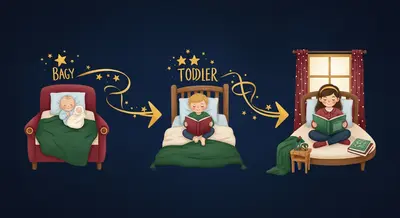
Around 6–9 months, babies begin to follow pointing and shared attention. They'll look where you look. They'll respond to their name. Reading becomes a joint experience in a new way — you can point to a picture and they'll look at it.
Around 12–18 months, most children begin to associate words with objects and people. Books with simple, named pictures become deeply engaging. They may pat a picture of a dog and look at you, as if to say: I know that one!
Around 18 months–2 years, narrative comprehension begins. Simple cause and effect, character names, the idea that something happens and then something else happens because of it. This is when stories start to feel like stories to them.
From 2 years onward, children can follow plots, remember story details, develop favourite characters, and — particularly with personalized stories — begin to understand that they can be the hero too.
But none of these milestones are start lines. They're just signposts showing you how the journey is going. The journey itself began the moment you first read aloud.
Practical Tips for Starting Early
If you're holding a newborn and wondering how to actually do this, here's the honest version:
You don't need a special newborn library. Any book you enjoy reading aloud is fine. Picture books. Poetry. Even, at a pinch, a novel you happen to be reading — your baby doesn't know you switched to your book. They just hear your voice.
Short is better than long. A two-minute board book read with warmth is worth more than a fifteen-minute epic read with exhaustion. Early bedtime stories don't need to be long.
Repetition is a feature, not a bug. Reading the same book every night for two weeks feels tedious to you and delightful to them. Don't fight the repetition.
Your voice matters more than your performance. You don't need to do voices (though voices are wonderful). A calm, warm, present reading voice is exactly right.
Include them in the experience. Point to pictures. Pause and make eye contact. Follow their gaze. Let the story be a conversation, even before they can have one.
And if you're looking for stories that grow with your child — stories that have your little hero's name woven through them, that feel made for them rather than simply given to them — you'll find that those kinds of stories have a particular magic at every stage. We've explored why children love seeing their name in stories, and it's worth a read when your little one reaches that recognition age.
The Answer
So: when should you start reading bedtime stories?
Now. Today. If your baby is in the womb, now. If they were born yesterday, now. If they're three months old and no one told you this was worth doing yet, now.
Not because you'll ruin something irreplaceable by starting late — you won't. Children are resilient and language-hungry at every age. But because the reason to start early isn't about outcomes. It's about the moment itself.
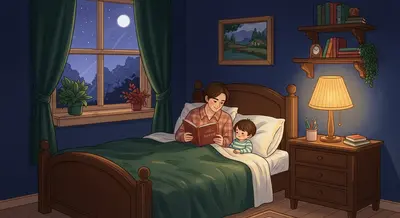
The lamp in the corner. The warm weight of a small body. Your voice, steady and soft, filling the room with a story. Your child, listening — not to the plot, not yet, but to you.
That's enough. That's everything.
Curious what a truly personalized bedtime story feels like? At OnceUponMe, every story begins with your little hero's name and grows from there. Come and see what we make together.