The Ultimate Guide to Bedtime Stories: Why They Matter More Than You Think
Discover why bedtime stories for kids are one of the most powerful gifts you can give. From brain science to bonding, here's everything you need to know.
7 min read
The Ultimate Guide to Bedtime Stories: Why They Matter More Than You Think
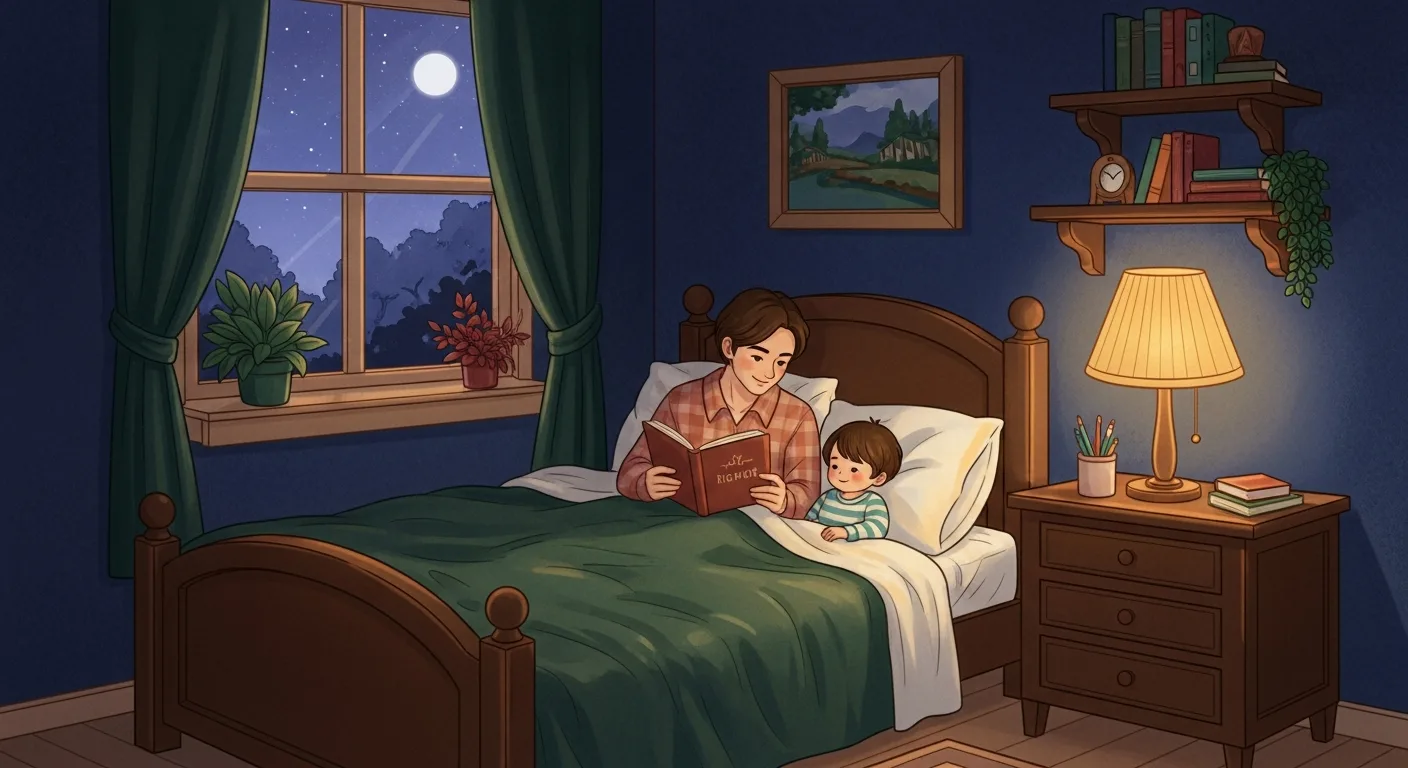
There is a moment, somewhere between the last sip of water and the first yawn, when everything slows down. The lamp throws a warm circle of light across the pillow. A small body burrows under the blanket. And a voice — your voice — begins to spin a world out of thin air.
Bedtime stories for kids have been part of human life for as long as there have been parents and children and the quiet dark of evening. And yet, in the rush of modern family life, it can be tempting to treat story time as a nicety rather than a necessity — something lovely to do when there is time, but skippable when there isn't.
This guide is here to make the case that story time is far more than a wind-down ritual. It is one of the most quietly powerful things you will ever do with your child.
A Very Old Magic: The History of Bedtime Stories
Long before books, there were stories. Parents and grandparents and village elders gathered children close in the evenings and wove tales of heroes, tricksters, magical creatures, and ordinary people doing extraordinary things. These oral traditions were the way cultures passed on values, warnings, wisdom, and wonder — all wrapped in the irresistible package of "and then what happened?"
The bedtime story as we recognize it today — a parent reading from a picture book or chapter book before sleep — became a widespread practice in the nineteenth century, as literacy rates rose and children's publishing began to flourish. But the impulse behind it is ancient. Stories told in the safety of evening, with a trusted adult nearby, have always been the way children learned to make sense of the world.
What has changed is that we now have research to explain what storytellers have always known by instinct.
What Happens in a Child's Brain During Story Time
When your little hero hears a story, something remarkable happens inside their developing brain. Neuroscientists call it "neural coupling" — the listener's brain activity begins to mirror the storyteller's. In other words, when you read with emotion and expression, your child's brain lights up in the same patterns as yours. You are literally thinking together.
This shared brain state is one reason bedtime stories feel so connective. It isn't just that you are in the same room — you are, in a very real sense, in the same story.
Beyond that, stories activate far more of the brain than simple information does. When a child hears that a character "smelled the warm bread baking," the sensory cortex responds. When the hero runs through the forest, the motor cortex flickers. Stories don't just describe experiences — they simulate them, giving children a safe way to rehearse emotions, scenarios, and decisions they haven't yet encountered in real life.
The Emotional and Developmental Benefits of Bedtime Stories
Language and Literacy
This one is well-documented and worth celebrating: children who are read to regularly arrive at school with dramatically larger vocabularies than those who are not. And it isn't just word count. Story time builds an intuitive sense of how language works — sentence structure, narrative arc, cause and effect, the way a well-chosen word can make a reader feel something.
Even before your little hero can read a single letter, being read to is building the architecture their reading brain will eventually use.
Emotional Intelligence
Stories are one of the safest laboratories for difficult emotions. When a character feels jealous, or scared, or left out, children can experience and process those feelings at a comfortable distance — through the character, not themselves. This is the gift that fiction has always given humanity, and it starts at bedtime.
Research consistently shows that children who are read to regularly develop stronger empathy and a richer emotional vocabulary. They are better able to name what they feel, understand what others feel, and navigate the complex emotional terrain of childhood.
Imagination and Creativity
A story whispered in a darkened room asks a child's imagination to do the heavy lifting. Unlike screens, which supply every visual in full color and motion, a book or a told story leaves wonderful gaps — and a child's mind rushes in to fill them. This active imagining is not passive entertainment. It is practice for the kind of creative, flexible thinking that will serve your little hero throughout their life.
Building Empathy Through Other Lives
One of the quietest and most profound things a bedtime story does is introduce your child to experiences unlike their own. A story about a child on the other side of the world, a character who looks different or faces different challenges, gently expands the circle of who your child considers "people like me." This slow, steady accumulation of other perspectives is how empathy is built — not in lectures, but in stories.
The Bonding That Happens Between the Pages
Ask any adult to describe a vivid childhood memory with a parent, and a striking number of them will describe being read to. Story time occupies a special place in the emotional memory because of what it combines: physical closeness, undivided attention, a shared adventure, and the specific voice of someone who loves you.
In the ordinary chaos of family life — school runs and work deadlines and dinner and homework — story time is a pocket of pure presence. Your phone is down. Your child is beside you. Nothing else is happening except this story, and you, and them.
That daily gift of focused attention is not a small thing. It is the raw material of a secure, trusting relationship. And children who feel securely attached to their caregivers show better outcomes across almost every area of development — social, academic, and emotional.
Sleep Science: Why Stories Help Kids Fall Asleep
There is also a beautifully practical reason to keep the story time habit: it genuinely helps children sleep better.
Sleep researchers have long understood the importance of transition rituals — predictable sequences of events that signal to the brain and body that sleep is coming. A consistent bedtime story is one of the most effective transition rituals available, because it does several things at once.
First, it lowers cortisol. The stress hormone that keeps us alert and reactive drops when we feel safe and calm. A warm, familiar story, read by a trusted voice, creates exactly that state.
Second, it replaces the stimulation of screens. The blue light and rapid content of devices actively inhibit melatonin production and keep children's brains in a stimulated state. A story does the opposite — it narrows the world to one gentle narrative, slowing the mental pace and preparing the brain for sleep.
Third, it creates predictability. Children — especially young ones — find enormous comfort in knowing what comes next. A story that follows a familiar rhythm, or a bedtime routine that reliably includes story time, tells the nervous system: this is safe, this is known, it is time to rest.
You can explore more of the science behind this in our article on how bedtime stories actually help kids fall asleep.
Building the Bedtime Story Habit
The best bedtime story routine is the one you will actually keep. Here is how to build one that sticks.
Start Simple
You do not need a beautiful reading nook or a curated library. You need a child, a story, and five to fifteen minutes. That is genuinely all. A library card, a simple picture book, a phone with an app — any of these is enough to begin.
Make It Consistent
Same time, same place, same sequence of events — this consistency is what makes the ritual work its magic. Children's brains love predictability at bedtime, and knowing "after bath comes story, then lights out" removes a great deal of negotiation and resistance.
Follow Their Interests
The fastest way to make story time feel like a punishment is to insist on books your child finds boring. Follow their lead, especially at the beginning. Dinosaurs? Pirates? Fairies who solve mysteries? Wonderful. An engaged child is a child who looks forward to story time.
Personalized Stories: A Special Kind of Magic
One of the most powerful ways to make bedtime stories feel truly magical is to make your little hero the star of the story — to hear their own name woven into an adventure, their own qualities celebrated in a character, their own world reflected in the tale.
At OnceUponMe, this is exactly what we create: personalized bedtime stories where your child's name, personality, and the details you love about them become the heart of every adventure. There is something about hearing your own name in a story that no amount of wonderful books can quite replicate. Explore how personalized stories work and see what a difference it makes.
Adjust as They Grow
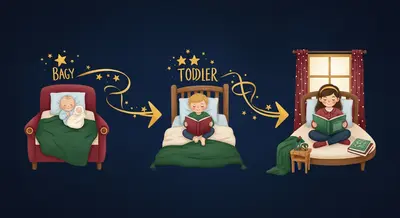
The right story for a two-year-old is very different from the right story for a seven-year-old — and the way you read together will shift too. What stays constant is the ritual and the connection. For a detailed guide on what works at every age, visit our piece on the perfect bedtime story routine for every age.
The Long Game
There will come a night — probably sooner than you expect — when your child will want to read to themselves, or announce that they are too old for bedtime stories. And that is a beautiful, bittersweet milestone.
But the years between infancy and independence, when story time is a nightly certainty, are a gift you are giving both of you. The love of language. The habit of imagination. The security of a predictable, warm ending to every day. The memories of your voice, telling them they were brave and worthy of adventure.
None of that disappears when the stories end. It is woven into who they become.
Ready to Make Story Time Magical?
If you would like to give your little hero a bedtime story that is made just for them — their name, their spirit, their very own adventure — we would love to help you create it.
Create your first personalized story at OnceUponMe and see what happens when a child discovers they are the hero of their own tale.
Because that is the magic that bedtime stories have always held. And now, it can belong entirely to them.