The Perfect Bedtime Story Routine for Every Age
From newborns to eight-year-olds, here's exactly how to build a bedtime story routine that fits your child's age and grows with them.
7 min read
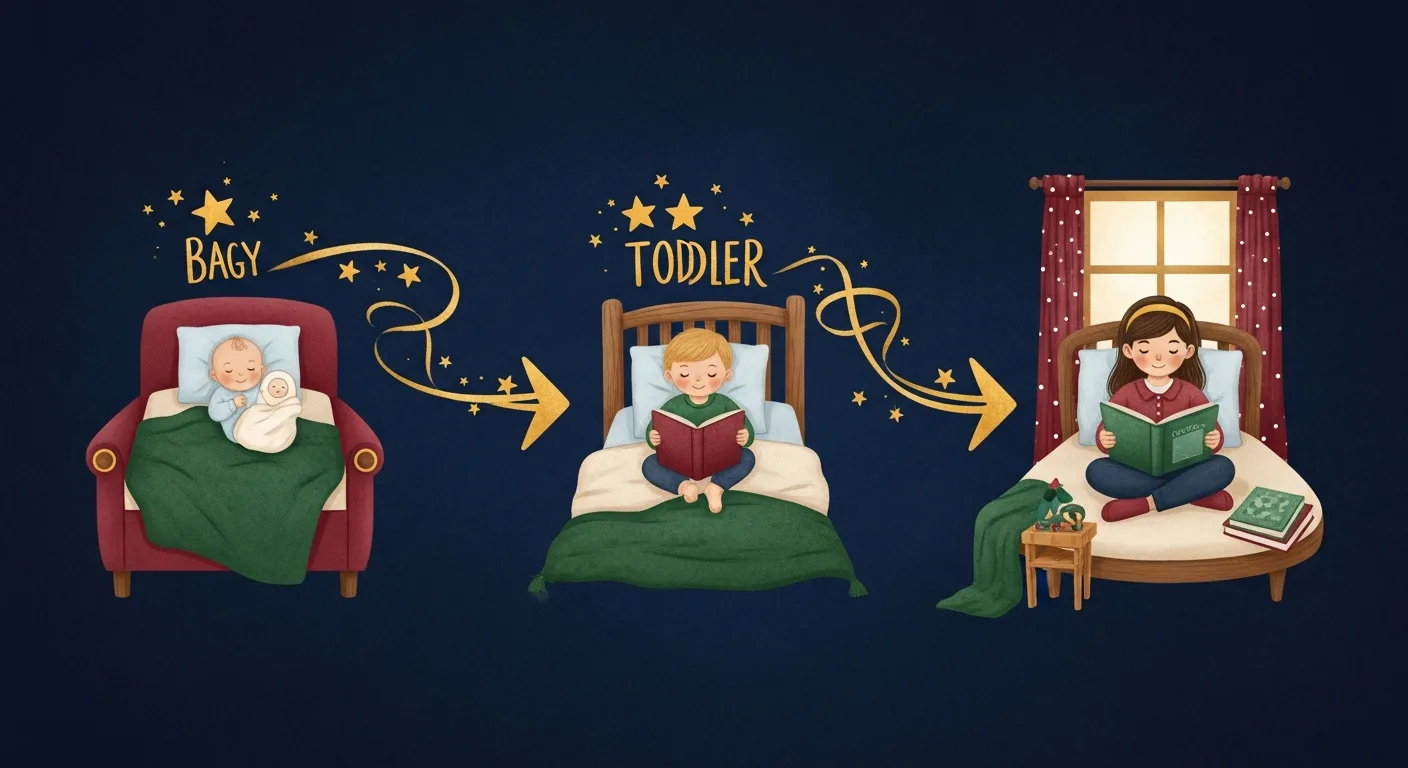
The Perfect Bedtime Story Routine for Every Age
Every child is different. Every family is different. And yet, somewhere across cultures and continents and centuries, the same scene plays out each evening: a small person settling down, a grownup leaning close, and a story beginning.
The bedtime story routine is one of those rare parenting practices that adapts beautifully to every stage of childhood. What it looks like when your child is four months old is nothing like what it looks like when they are seven — but the heart of it stays the same. A trusted voice. A shared adventure. The gentle, reliable signal that the day is done and rest is coming.
This guide walks through the best bedtime story routine for every age, from the earliest days of babyhood through the threshold of independent reading. Wherever you are starting, there is a version of this ritual waiting for you and your little hero.
Why Routine Matters So Much at Bedtime
Before we dive into the specifics by age, it is worth understanding why routine itself is so powerful.
Children's brains — especially young children's brains — are wired to find comfort in predictability. When the same sequence of events happens each evening, the brain begins to associate those events with sleep. Heart rate slows. Cortisol drops. The nervous system shifts from "alert and active" to "safe and winding down."
A bedtime story is one of the most effective anchors in this sequence, because it combines so many sleep-friendly elements at once: stillness, warmth, a trusted voice, and a gentle narrative that narrows the world down to one quiet thread. It is transition ritual and bonding time and language development all wrapped in a single fifteen minutes.
The key is consistency. You don't need to be perfect every night — life will intervene, and that is fine. But the more reliably story time appears in the same spot in the evening sequence, the more powerfully it works. To understand more about the sleep science behind this, see our piece on how bedtime stories actually help kids fall asleep.
Ages 0–1: Babies and the Sound of Your Voice
It might feel a little silly at first — reading a book to someone who cannot understand a single word and will almost certainly fall asleep before the end of page two. But reading to babies from the earliest weeks is one of the most valuable things you can do, and here is why.
Babies do not need to understand words to benefit from language. They are soaking up the rhythm, the music, the patterns of speech. They are learning that this sound — your voice — means safety and closeness. They are building the neural pathways that will eventually become language comprehension, years before a single word clicks into meaning.
What Works for Babies
Board books with high contrast and simple images capture what little visual attention babies have in the early months. By around four to six months, they will start to actually look at the pages, and by nine to twelve months, many babies will begin reaching for books and showing clear preferences.
The words matter less than the music. Nursery rhymes, simple repetitive texts, anything with a soothing rhythm — these are perfect for babies. The goal is not comprehension. The goal is warmth, closeness, and the sound of your voice doing something gentle and predictable.
Keep it short. A five-minute ritual is plenty. Bath, feeding, a song or short story, and sleep. Even two or three minutes of shared reading before a feeding counts. You are planting a seed.
Make it the same each night. Even at this age, the predictability of the sequence matters. "After bath, we read our story" is the beginning of a lifelong habit.
Ages 1–3: Toddlers and the Power of Repetition
Toddlers are gloriously, maddening wonderful about books: they will want you to read the same story seventeen nights in a row, and they will notice immediately if you skip a page or change a single word.
This is not a bug. It is a feature.
Repetition is how toddlers learn. Each time through a familiar story, they are deepening their understanding of the words, the structure, the emotional beats. And there is real comfort in knowing exactly what comes next — toddlers live in a world where so much is unpredictable and beyond their control. A story they know by heart is a small, safe kingdom.
What Works for Toddlers
Follow their obsessions fearlessly. If your little hero wants nothing but books about trucks or cats or the moon for six straight months, lean in. Passionate engagement with any story is infinitely more valuable than polite tolerance of a "better" one.
Read with your whole face. Toddlers watch you as much as they watch the book. Big expressions, funny voices, dramatic pauses — these are not just entertaining. They are teaching your child how stories work, how emotions are expressed, and how language creates feeling.
Invite participation. "What do you think is behind the door?" or "Can you find the red balloon?" or just leaving a familiar line unfinished for them to complete — all of these transform story time from performance to conversation.
Aim for ten to fifteen minutes. Toddlers have genuine attention spans for books they love. Two or three short books, or one slightly longer one, is a reasonable target. Always end on a calm, quiet note.
Build the sequence. Bath, pajamas, teeth, story, song, sleep. The more consistent the order, the more powerfully the brain associates "story" with "sleep is coming."
Ages 3–5: Preschoolers and the Exploding Imagination
Something shifts around age three. Children begin to understand that stories are not just sequences of events — they have beginnings, middles, and ends. Characters want things. Problems happen. Solutions are found. And sometimes, the ending is surprising.
This is the age when story time becomes genuinely magical, when your little hero starts anticipating plot twists and asking "but why?" about characters' choices and acting out scenes from their favorite books the next morning.
What Works for Preschoolers
Longer, richer stories. Preschoolers can follow and enjoy picture books with more complex plots and more text per page. Chapter books with illustrations — the shorter ones — often work beautifully at this age, especially if you return to the same book over several nights.
Ask open questions. "Why do you think the bear felt sad?" or "What would you do if you were the princess?" These conversations after (or during) the story are doing tremendous developmental work — building empathy, narrative comprehension, and language skills.
Let them choose. Giving your preschooler ownership over the story selection is powerful. It builds agency and ensures genuine engagement. You might offer two or three options; you might let them roam the shelf freely.
Introduce personalized stories. This is a beautiful age to discover that stories can be made just for them. When your little hero hears their own name in the adventure — when the brave, curious child in the story has their exact name and their exact laugh — something lights up. Personalized bedtime stories from OnceUponMe are crafted precisely for this feeling of magic recognition.
Fifteen to twenty minutes. Preschoolers can sustain story time for a meaningful stretch, especially for stories they love. But still end quietly — avoid exciting cliffhangers right before lights out.
Ages 5–8: Early Readers and the Chapter Book Era
Around age five or six, something wonderful and a little bittersweet happens: your child starts to read. Letters click into words, words into sentences, sentences into meaning. The door to independent reading swings open.
This does not mean story time is over. Not even close.
Reading aloud to children who can read independently continues to benefit them significantly — because what you read aloud is almost always more complex than what they can read alone. Your early reader might be tackling simple picture books on their own while you are reading them the first chapters of a great adventure novel at bedtime. Both are valuable. They are different skills, different pleasures.
What Works for Early Readers
Chapter books with a nightly chapter or two. The ongoing narrative of a chapter book transforms bedtime into something children look forward to all day. Where did we leave off? What is going to happen? The anticipation is itself a gift.
Take turns reading. Let your little hero read a page, or a paragraph, while you read the rest. This builds their reading stamina and confidence in a low-stakes, loving context.
Talk about the story. At this age, the conversation around the story is often as rich as the story itself. What did they notice? What surprised them? Who was their favourite character and why?
Don't stop because they can read. This is perhaps the most important note for this age group. The temptation, once a child is reading independently, is to step back from shared reading. But the connection, the language modeling, the sheer joy of a shared story — these do not have an expiration date.
Personalised stories still matter. Older children in this range love the thrill of a story that knows their name, their interests, their world. At OnceUponMe, we create personalized stories that grow with your child — adventures calibrated to what they love and who they are becoming.
Adapting the Routine as They Grow
One of the most beautiful things about the bedtime story routine is that it never really has to end. What changes is the shape.
An eight-year-old's story time might look like thirty minutes reading side by side — each with their own book, occasionally sharing a funny line or a surprising moment. Or it might be a parent reading aloud from a novel while the child winds down. Or a shared audiobook at the end of the day.
The ritual evolves. The connection continues.
The through-line, from newborn to early reader and beyond, is this: a reliable, warm ending to the day, anchored in story, with someone who loves them nearby.
A Few Practical Notes for Every Age
- Devices away. Screen-free story time is more than an aesthetic choice — it is a sleep science recommendation. The presence of even a dark, silent phone can reduce the sense of focused attention children crave.
- Same spot, same time. The physical location matters. A consistent "story chair" or corner of the bed becomes associated with calm and sleep in ways that serve the whole family.
- You do not need to be a "good reader." Expression matters more than performance. Your child is not judging your dramatic range. They just want your voice, telling them a story, close to them.
- Short nights still count. On busy nights when there is only time for five minutes, do the five minutes. The habit of showing up is more important than the length of any individual session. (We have a whole guide on exactly this — short bedtime stories for busy parents.)
Ready to Begin?
Whether your little hero is a newborn who just wants the music of your voice, or a six-year-old who wants to know what comes next in the story, there is a perfect bedtime story routine waiting to become part of your family.
And if you would like to give them a story that is made entirely for them — their name, their personality, their own adventure — OnceUponMe is here to help you create it.
Because the best bedtime story is the one your child will remember forever. And those stories begin tonight.