Why Kids Light Up When They See Their Name in a Story
Why does a kid's name in a story produce such pure joy? Explore the psychology behind name recognition, self-referential learning, and the pride that keeps kids reading.
7 min read
Why Kids Light Up When They See Their Name in a Story
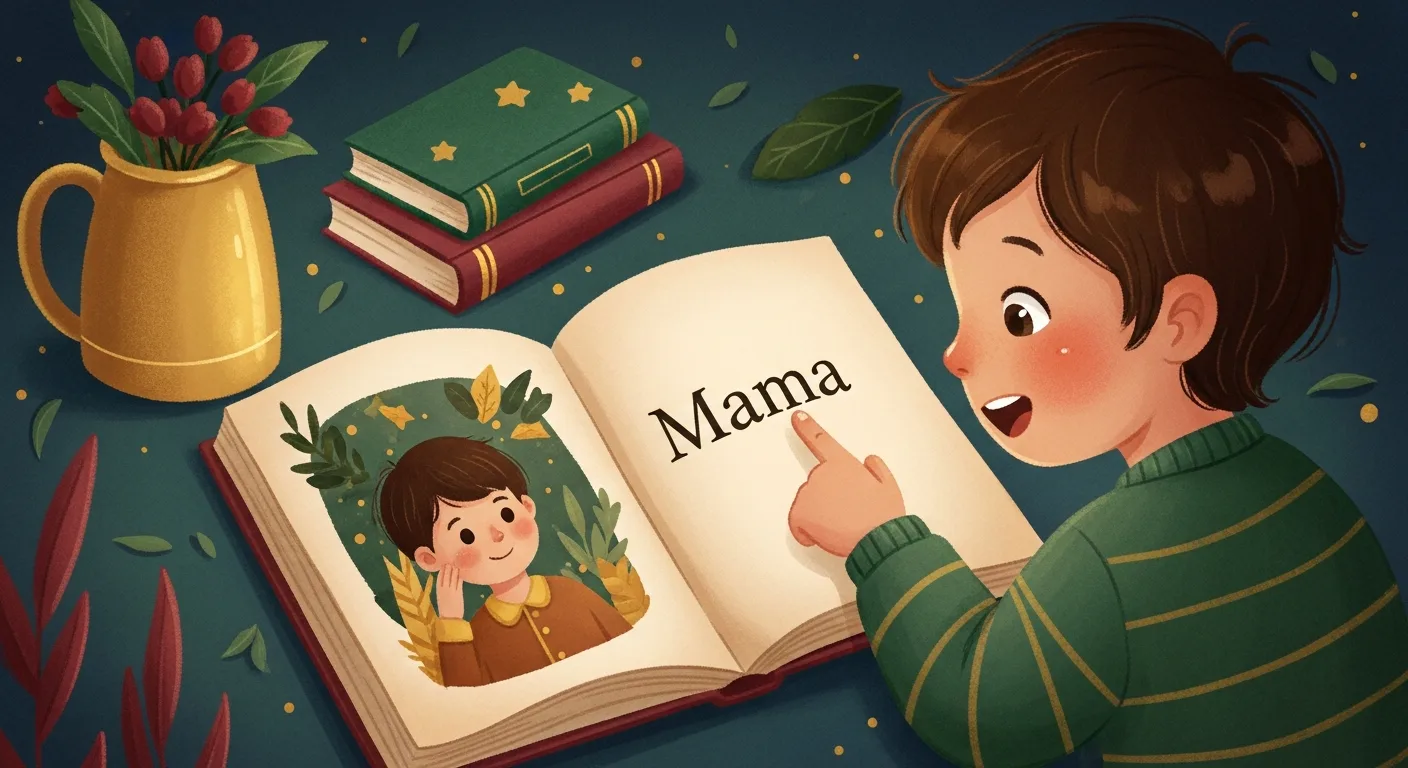
Picture the scene. You're sitting beside your child, a new story open between you. The page turns, the sentence unfolds, and there — right there in the middle of the adventure — is your child's name. Not in the dedication. Not on the cover as an afterthought. Right in the heart of the story, as if it always belonged there.
Watch their face.
There it is: the eyes going wide, the sudden intake of breath, the enormous grin that seems almost too big to contain. And then, usually, they grab your arm. They point. They say the same thing children have been saying since the very first time someone put their name in a story: "That's ME!"
Every parent who has witnessed that moment knows it. And most of them, without quite being able to explain why, feel it too — a warmth, a fullness, a quiet pride. Something about seeing your child recognized in a story, celebrated in a story, touches something deep.
So what is actually happening in that moment? Why does a child's name in a story produce something so much bigger than a child's name in any other context? The answer turns out to be fascinating — and it has a lot to do with how children discover who they are.
The Psychology of Seeing Your Own Name
Long before children can read, they recognize their name. It is, almost always, the first word a child learns to identify in print. Before they know letters, before they understand that squiggles on a page mean sounds, they know the particular shape of the squiggles that mean them.
This recognition is significant. Psychologists call it "own-name superiority" — the tendency of the human brain to process and respond to our own name faster and more intensely than almost any other word. Our name is so deeply tied to our sense of self that encountering it anywhere triggers a kind of internal alert: something relevant is happening here. Pay attention.
For adults, this effect is familiar, if often unconscious. We hear our name across a crowded, noisy room and we hear it — clearly, immediately, above everything else. That's own-name superiority at work.
For children, the effect is even more pronounced, because children are still in the active process of building a self. Every time a young child encounters their name — spoken, written, embedded in a story — it reinforces something essential: I exist. I am someone. I have a name that belongs to me.
The Self-Referential Effect
Researchers have identified something called the "self-referential effect" in memory and learning. Simply put, information connected to the self is remembered more vividly, processed more deeply, and retained for longer than information that has no personal connection.
When children encounter information about themselves — when the story is explicitly about them, when their name is the name of the hero — that information doesn't just pass through the surface of their attention. It sinks in. It matters. The brain flags it as important, because it is connected to the most important subject in any child's world: themselves.
This isn't selfishness. It's developmental. Young children are, by biological design, focused on figuring out who they are and where they fit in the world. A story that puts them at the center isn't indulging vanity; it's working with the grain of how children actually learn.
From Recognition to Engagement: The Reading Transformation
Here is something parents often notice but rarely have a framework for: children who otherwise squirm through storytime will sit perfectly still for a personalized story. Children who claim to hate books will ask to hear their personalized story again. Children who drift off during reading will lean forward, focused, eager.
This isn't a coincidence. It's engagement — deep, intrinsic engagement of a kind that's genuinely rare and genuinely valuable.
The Attention Problem, Solved
Children's attention is a limited and precious resource, and it is relentlessly competed for. The world is full of bright, loud, stimulating things that have been specifically designed to capture a child's focus. Against that landscape, a quiet book faces an uphill battle.
A personalized story changes the equation entirely. It isn't competing for your child's attention with the world. It is your child's world, at least for the duration of the story. The main character has their name. The hero faces challenges your child would face, feels feelings your child recognizes. There is no question of whether the story is relevant to them. It is explicitly, entirely, inarguably about them.
Investment in the Outcome
Children who see their name in a story don't just read more carefully — they care more about what happens. When the hero (who is them) faces a challenge, they feel the stakes. When the hero succeeds, they feel the triumph.
This investment transforms the experience of reading from a skill exercise into an emotional journey. And emotional journeys are what children remember. They're what children want to revisit. They're what children eagerly share with anyone who will listen: "Did you know I went on a spaceship?" or "I saved the dragons."
That kind of enthusiasm is the seed of a lifelong love of reading — and it starts with a name on a page.
The Pride That Lives After the Last Page
The moment of recognition — that's ME! — is only the beginning. What stays with a child long after the story ends is something quieter and deeper: pride.
When a child sees themselves as the hero of a story, something shifts in how they understand themselves. Stories are, culturally and psychologically, one of the primary ways human beings make meaning. We have always used stories to say: this person matters. This person is worth telling about. Heroes and heroines in stories are celebrated. Their courage is noted. Their kindness is praised.
When your child is that hero, they receive all of that celebration for themselves.
What Parents Tell Us
The moments parents describe most often aren't the initial gasp of recognition — though those are wonderful. They're the quieter moments that follow.
The child who asks for their personalized story every single night for three weeks straight, not because they've forgotten it, but because they want to live in it again.
The child who brings their book to school to show their teacher, because they want someone else to see that they went on an adventure.
The child who, when asked what they want to be when they grow up, answers: "A hero. Like in my story."
These aren't trivial moments. They are the accumulation of a narrative that a child is building about themselves — a narrative in which they are capable, they are brave, they are someone worth writing about.
Pride as a Foundation for Learning
Research on early childhood development consistently points to self-efficacy — a child's belief in their own ability to succeed — as one of the strongest predictors of later academic and personal achievement. Self-efficacy isn't just confidence; it's the specific belief that I can do things. I matter. My actions have effects.
A personalized story feeds self-efficacy directly. When your little hero reads about themselves solving a puzzle, befriending a dragon, finding the hidden treasure — they aren't just entertained. They are rehearsing competence. They are practicing, in the safe space of imagination, what it feels like to succeed.
That practice matters more than it might seem.
Names, Identity, and Belonging
There's one more dimension to why children respond so powerfully to seeing their name in a story, and it has to do with belonging.
Children are social creatures navigating a large, complex world in which they are, quite often, the smallest and least powerful person in the room. They watch adults make decisions. They follow rules they didn't create. They go to places chosen for them, at times chosen for them, doing things asked of them.
A personalized story is one of the few spaces that is entirely, explicitly theirs. The story didn't exist before their name went into it. The adventure wasn't possible without them. The whole world of the story was created around the fact of them — their name, their qualities, their importance.
In that story, they are not small. They are not powerless. They are the reason the story exists at all.
That is a profound gift to give a child — and it comes wrapped in something as simple, and as extraordinary, as their own name on a page.
Building a Story Library That Grows With Them
One of the beautiful things about personalized stories is that they can grow as your child grows. A story that works perfectly at four looks different at seven — the challenges can be greater, the language richer, the adventure more complex. The name at the heart of it stays the same, but the child filling that name expands and deepens and becomes more fully themselves.
Building a collection of personalized stories over time means something special: a library that is, quite literally, your child's story. Their history of adventures. The evidence, accumulating year by year, that they have always been someone worth telling stories about.
Curious about how different story themes bring out different kinds of magic? Explore the story themes kids love most — from space adventures to enchanted forests to pirate seas.
Or if reading itself feels like a battle in your house right now, discover how personalized stories reach reluctant readers in ways that nothing else quite manages.
A Story With Their Name Is Waiting
Somewhere, right now, there is an adventure with your child's name woven through every page. A story where they are the hero, the discoverer, the one who saves the day or makes the friend or finds the way home.
The gasp is coming. The wide eyes, the pointed finger, the that's ME — all of it is waiting, just on the other side of the first page.
Create your child's personalized story at OnceUponMe.com and watch what a name can do.