Why Multicultural Stories Matter for Every Child
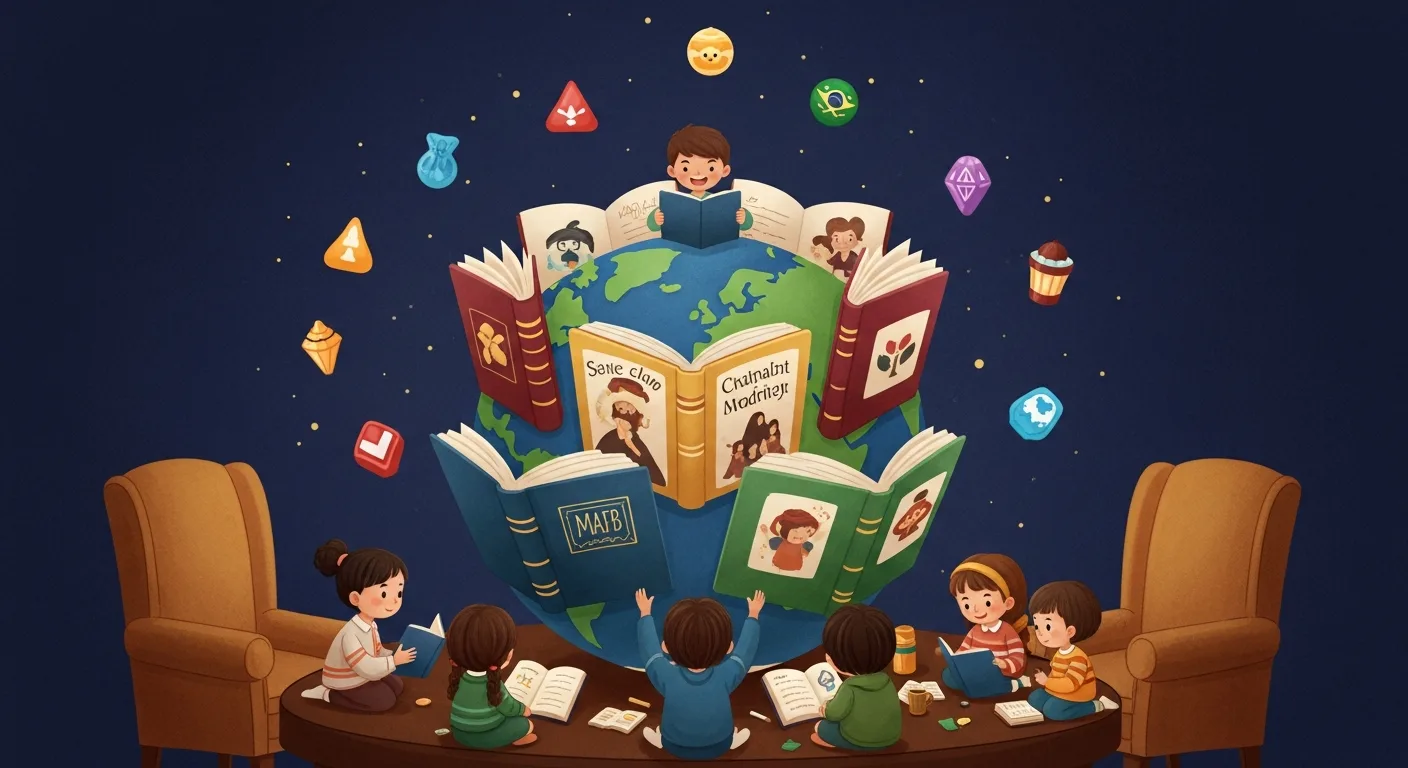
Multicultural stories give every child both a mirror and a window — building empathy, curiosity, and a wider, richer sense of the world they live in.
6 min read
Why Multicultural Stories Matter for Every Child
Somewhere in the world right now, a child is hearing a story for the very first time that sounds like their life. The names in it ring familiar. The food described at the dinner table is one they know. The celebration the characters prepare for is one they have danced at themselves. And for the first time in perhaps a long time, they feel that unmistakable, settling warmth: I exist in stories too.
And somewhere else, a different child is hearing a story for the first time that sounds nothing like their life at all — new names, unfamiliar traditions, a landscape they have never seen. And in the wondering that follows, they feel something too: There is more to the world than I knew.
Both of these moments matter. Both are the gift that multicultural stories give every child who encounters them.
Windows and Mirrors: A Framework Worth Knowing
In the 1990s, educator and scholar Rudine Sims Bishop introduced a now-beloved way of thinking about what children need from books. She described stories as functioning like mirrors and windows.
A mirror is a story in which children see themselves reflected — their family structure, their cultural background, their daily life, their face. Mirrors say: You are here. You matter. Your world is worth telling stories about.
A window is a story that offers a view into a life or world that is different from your child's own. Windows say: Look at what else exists. Look at how others live, love, celebrate, and belong.
Both are essential. A child who only ever finds mirrors may struggle to develop genuine curiosity and empathy about lives different from their own. A child who only ever finds windows — who never sees themselves reflected — can begin to absorb the quiet, corrosive message that some stories are worth telling and others are not.
The richest reading life, for any child, includes both.
What "Representation" Actually Means in a Child's Life
The word "representation" can sound abstract. In practice, it is profoundly concrete.
When your little hero repeatedly encounters stories in which all the main characters look, speak, and celebrate like one particular kind of person, the curriculum of the imagination quietly narrows. Story after story shapes what feels normal, heroic, funny, and worth caring about.
This matters for every child — not only for those from underrepresented backgrounds.
For a child who rarely sees themselves in stories, the effect can be isolating in ways that are hard to articulate but deeply felt. For a child from the dominant cultural background who rarely encounters diverse stories, a different kind of narrowing happens: a world full of extraordinary people begins to seem like it contains only people who look like them.
Multicultural stories are a corrective to both of these. They say: The world is bigger and richer than any single story can hold.
Building Empathy Through Story
Empathy — the capacity to genuinely imagine what someone else's experience feels like — is not a trait children either have or do not have. It is a skill, and like all skills, it grows with practice.
Stories are one of the most powerful empathy-building tools we have. When your child becomes absorbed in a character's experience — when they cheer for them, feel for them, worry about them — they are rehearsing the same imaginative act that empathy requires: stepping into another perspective.
Multicultural stories extend this practice across cultures, traditions, and experiences that your child might not encounter in daily life. A child who has laughed alongside a character celebrating Diwali, or felt the tension of a story set during Lunar New Year preparations, or followed a family navigating a new country and language — that child has had their empathetic imagination stretched in ways that stay.
This is not a political project. It is simply good storytelling doing what it has always done.
Stories Create Curiosity Before Prejudice Has a Chance to Set
Developmental researchers have found that young children form impressions of "other" groups early — often by age three or four. The stories they encounter in those early years quietly shape the associations they build.
A child who has encountered diverse characters with rich inner lives, complex families, and genuine heroism develops a very different set of early associations than a child whose story diet has been narrow. Multicultural stories in the early years are not remedial. They are foundational.
Expanding Worldview: Beyond Tokenism
Not all "diverse" stories are created equal, and it is worth being thoughtful about what you choose.
The best multicultural stories share a few qualities:
Specificity over generality. A story set in a particular place, during a particular celebration, within a specific family's traditions is almost always richer and more authentic than one that gestures vaguely at a culture. Children pick up on the difference between a story written from the inside and one that treats a culture as a backdrop or costume.
Characters with full inner lives. The characters in a good multicultural story have the same depth and complexity as any beloved character — hopes, fears, funny moments, confusing feelings, and their own distinct personalities. Their cultural background is part of who they are, not a substitute for who they are.
Authentic authorship. Stories written or developed by people with genuine connection to the culture they depict tend to carry a vitality and accuracy that cannot be easily imitated. As you build your child's story library, it is worth seeking these out.
Ordinary life alongside celebration. It is wonderful to share stories about cultural celebrations and traditions. It is equally important to share stories where a character from a different background is simply doing the ordinary things all children do — going to school, worrying about a friend, learning something new. Both kinds of stories say: These are full human lives, not just holidays and ceremonies.
Cultural Curiosity: The Gift That Keeps Giving
Something wonderful happens when a child becomes genuinely curious about the world's cultural diversity. Questions start. Conversations begin. Connections are drawn.
"Do real people actually do that?" "Can we try making that food?" "What language do they speak in that story?" These are not interruptions to learning. They are learning.
And here is the thing about curiosity: it tends to grow in the direction it is fed. A child who has been nourished on stories from many places and traditions develops an appetite for that kind of richness. By the time they are old enough to encounter difference in their school, their neighborhood, or their world, they arrive already leaning forward with interest rather than pulling back with unease.
Multicultural Stories for Every Kind of Family
A common misconception is that multicultural stories are only important for families from minority or underrepresented backgrounds. In fact, the research and practice of diverse storytelling suggests the opposite: children from majority-culture backgrounds often benefit the most from intentional exposure to multicultural stories, precisely because their default environment may already be so heavily mirrored.
For families from underrepresented backgrounds, the right stories feel like a homecoming. For families from majority backgrounds, they feel like a door swinging open.
For every child, they feel like good stories — because they are.
Choosing Multicultural Stories: A Simple Guide
If you want to bring more multicultural storytelling into your child's life, here are some gentle starting points:
Follow your child's existing interests. If they love animals, look for animal stories from African, Asian, or Indigenous storytelling traditions. If they love adventure, seek out heroes from cultures they have not encountered yet. Starting with what already captivates them makes the introduction feel natural rather than like a lesson.
Ask a librarian. School and public librarians are an underused resource for this. Most are deeply knowledgeable about diverse children's literature and genuinely love the chance to help parents find the right book.
Let your child lead when possible. When you offer choices, you might be surprised which stories capture their imagination. Children often gravitate toward what they sense they need — whether that is a mirror or a window.
Include audio stories. For families where reading time is limited, audio stories can open the same doors as a physical book. A story told aloud carries all the cultural richness of a written one — and sometimes even more, when the teller's voice carries the rhythm and sound of the language itself.
Every Story Is a Door
The philosopher and storyteller Martin Buber once said that all real living is meeting. Every time your child meets a character from a world unlike their own, something real happens — a strand of connection forms, an assumption loosens, a sense of the possible expands.
That is what multicultural stories do, one page (or one listen) at a time. They grow a child who is ready to meet the world — its full, extraordinary, varied world — with open eyes and a curious heart.
At OnceUponMe, we believe every child deserves stories where they are the hero — and stories that take them somewhere new. Explore our personalized story themes to find the perfect adventure for your little hero today.
Looking for more ways storytelling shapes who your child becomes? Read How Personalized Stories Build Identity in Children and Storytelling Milestones: What to Expect from Ages 1–8.