5 Ways to Make Bedtime Stories More Interactive
Turn bedtime reading into a two-way adventure with these 5 fun, simple ways to make bedtime stories more interactive for your child.
6 min read
5 Ways to Make Bedtime Stories More Interactive
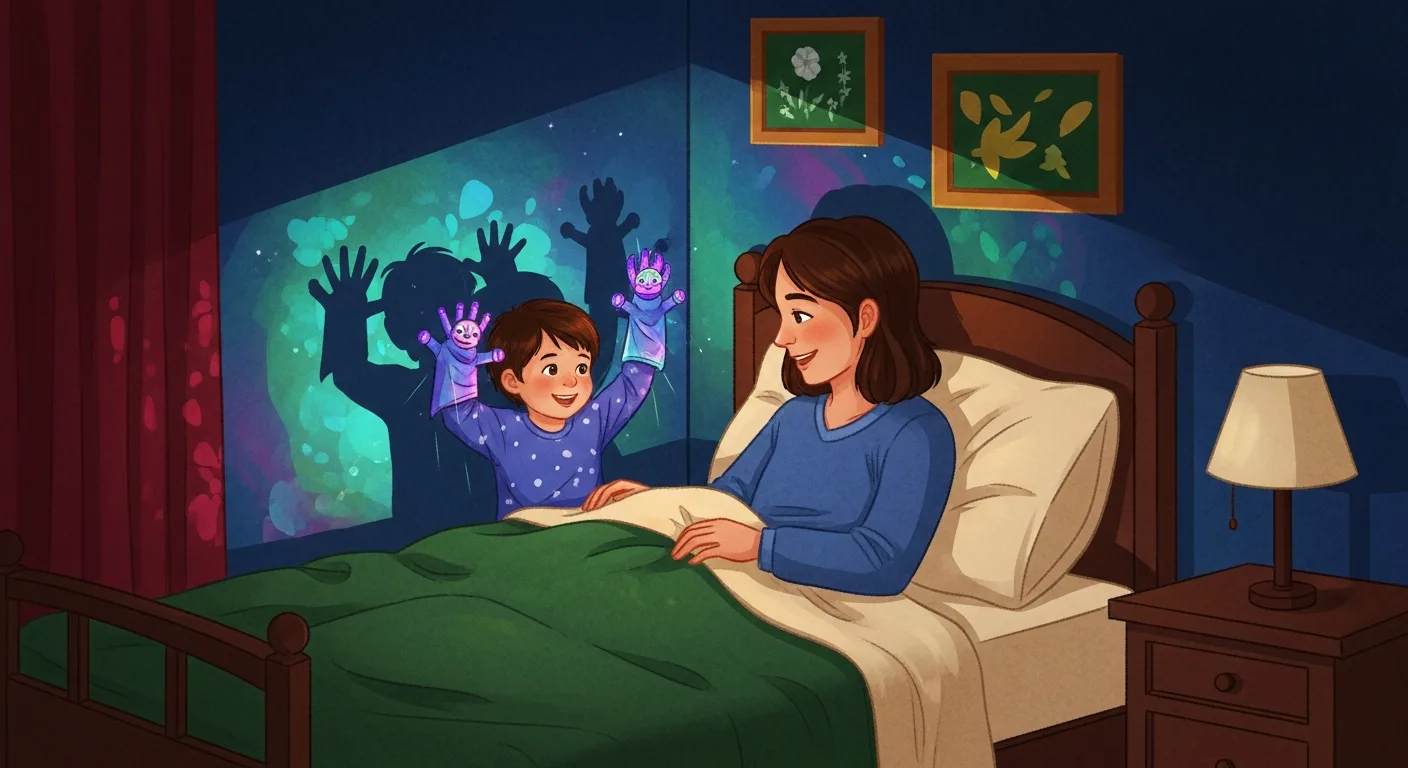
Picture this: you're halfway through a bedtime story, your child's eyes are wide open, and instead of drifting sleepily toward dreamland, they're leaning forward — asking questions, finishing sentences, acting out the dragon's roar with surprising commitment. That's not a distraction. That's the magic working.
Interactive bedtime stories are one of the richest things you can offer your child at the end of the day. Not because they turn reading into a lesson, but because they turn it into a conversation — a shared world where your little hero's imagination gets to stretch alongside yours.
The best part? You don't need props, puppets, or a theatre degree. You just need a few simple habits and the willingness to play.
Here are five of our favourite ways to bring bedtime stories alive.
1. Use Different Voices and Sound Effects
This one feels a little silly at first. But there's something that happens when you give the grumpy troll a raspy grumble or make the sound of rain by drumming your fingers on the bedside table — your child's attention snaps into focus in a way that no perfectly read sentence ever quite manages.
Sound is deeply tied to memory and emotion. Even very young children respond to shifts in tone and rhythm before they can follow a plot. A whispery voice for secrets, a booming voice for giants, a tiny squeaky voice for the mouse who saves the day — these aren't performance tricks. They're signposts that help children map the emotional landscape of a story.
How to start
You don't need to be a voice actor. Start small. Try:
- Changing your pace: slow down for suspenseful moments, speed up when the chase begins.
- Whispering when the characters are hiding or sneaking.
- Adding one recurring sound effect — a knock at the door, a wolf howl, the creak of a mysterious gate.
Let your child join in too. Ask them to make the sound of the storm, or to growl like the bear. Once they're making sounds alongside you, they're inside the story — not just listening to it.
2. Pause and Ask Questions
This is the simplest shift you can make, and it changes everything. A well-placed question mid-story turns a passive listener into an active thinker.
The key is to ask questions that invite imagination, not ones that test comprehension. You're not quizzing them. You're exploring with them.
Questions that open doors
- "What do you think is on the other side of that door?"
- "If you were the main character, what would you do?"
- "Why do you think she looks so worried?"
- "What do you think happens next?"
These questions do something quietly wonderful: they teach children that stories aren't fixed, finished things that adults deliver to them. Stories are living, breathing worlds that can be shaped and explored. That's a gift that extends far beyond bedtime.
For toddlers and younger children, keep questions simple and concrete. "Is the bunny happy or sad?" For older children, you can go deeper: "Why do you think the prince didn't just tell the truth from the beginning?"
There's no wrong answer. In fact, the wilder the answer, the better. Your child's unexpected responses often reveal exactly what's going on inside that brilliant, busy mind of theirs.
3. Let Them Choose What Happens Next
Every now and then, put the story in their hands.
Not the whole book — but a moment. A crossroads. A "what should she do?" pause that genuinely waits for an answer before continuing.
This works beautifully with familiar stories (you can bend them) or with looser, more freeform tales you make up as you go. It also works brilliantly with personalized stories where your child is already the main character — because when it's their name in the story, the idea that they get to make the choices feels completely natural.
A few ways to offer the choice
- At a fork in the road: "The path goes left into the forest or right to the village. Which one, do you think?"
- When the hero needs help: "She needs a friend. Who should appear?"
- When danger is coming: "Quick — where should he hide?"
Don't worry about being consistent with the original story. The point isn't narrative coherence — it's engagement and ownership. Children who feel like they matter to the story pay attention to the story. Simple as that.
And if their choice leads somewhere wonderfully unexpected, lean into it. "You said the dragon should help him — I love that. Let's see how..." You'll have more fun too.
4. Pause and Predict
Before you turn the page — or before you reach the end of a chapter — try stopping and asking your child what they think will happen.
Prediction is one of the most powerful cognitive skills early literacy builds. But more immediately, it's thrilling. When a child makes a prediction, they become invested in finding out whether they were right. They want to hear what comes next. That's the engine of every great story.
How to make prediction a habit
- At natural story turning points: "Oh no — the key is gone! What do you think happened to it?"
- When you can see something coming: "Her little brother keeps eyeing her birthday cake. I wonder what's about to happen..."
- After something surprising: "Wow! I did not see that coming. Did you? What do you think she'll do now?"
Let their predictions be wrong. Especially celebrate when they're wrong in an interesting way — "Ooh, you thought it was the fox! But look who it really was..." — because the surprise is half the joy.
Older children can start making predictions at the start of a story just from the cover illustration or title. This is a wonderful habit to build. It primes their brain to be curious and engaged from the very first word.
5. Act It Out
Some children don't just want to hear stories. They want to live them.
If your little hero tends to wriggle, roll around, or stage-whisper along with the action, that's not restlessness — that's embodied engagement. Their body is trying to participate. Let it.
You don't need to turn bedtime into a full theatrical production (although if that's what you've become, no judgment). Even small physical moments can bring a story to life:
- Stomp like giants as the giant approaches.
- Tiptoe together when the characters sneak past the sleeping dragon.
- Roar, growl, chirp, or squeak on cue.
- Act out the final scene after the story is done — a little re-enactment that cements the joy.
For children who learn kinesthetically — who understand the world through movement and touch — physical participation in a story isn't just fun. It's the way they process and remember what they've heard.
You might also find that acting out stories sparks your child's own storytelling. Children who get to perform a story often want to tell their own story back to you the next night. And honestly? Listening to a five-year-old narrate their own epic adventure, complete with sound effects and dramatic pauses, is one of the finest things parenthood has to offer.
A Note on "Doing It Right"
There's no correct way to read a bedtime story. Some nights, you'll do all five of these things and everyone will be bright-eyed and bubbling. Other nights, you'll barely get through page three before someone's asleep — and that's a different kind of magic entirely.
What matters isn't the technique. It's the closeness. The fact that you're there, your voice filling the room, your child tucked in beside you, both of you briefly inhabiting the same imaginary world before the day lets go.
If you're looking for stories that feel built for interaction from the very first page — stories where your child is already the hero, already named, already waiting to discover what comes next — you might love what we create at OnceUponMe. Every story is made with your little hero in mind, from the character's name to the details that make them feel seen.
Because the best interactive bedtime story isn't one with the cleverest technique. It's one your child never wants to end.
Ready to make your little one the star of their own adventure? Explore our personalized stories and see how a name can change everything.