Personalized Stories vs. Traditional Books: Why Not Both?
Personalized stories vs. traditional books — explore the magic each one brings and how together they build a child's richest, most adventurous reading life.
7 min read
Personalized Stories vs. Traditional Books: Why Not Both?
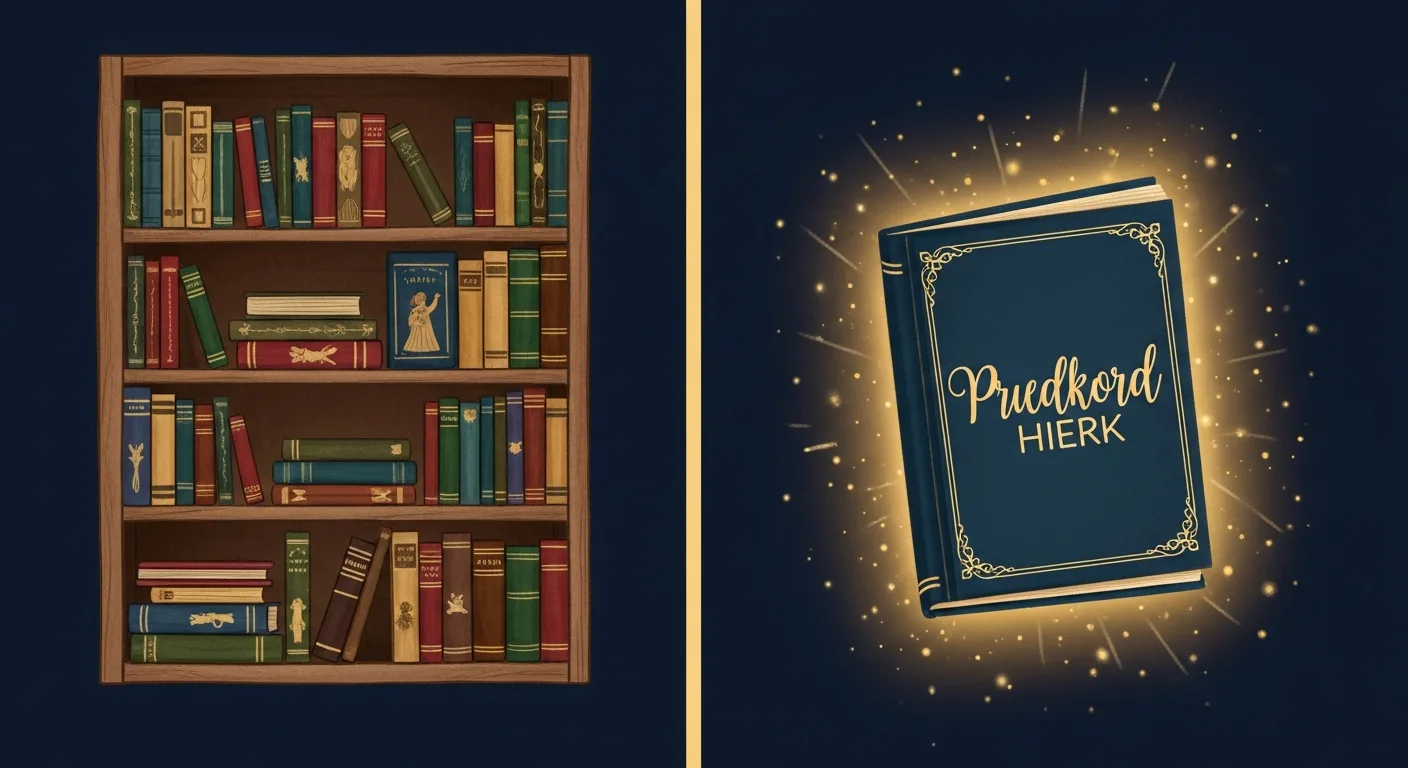
There's a bookshelf in a lot of family homes that tells a kind of autobiography. The battered Guess How Much I Love You with the spine that's been read nearly through. The Roald Dahl collection that smells faintly of the grandparent who gave it. The picture books in board-book format, corners chewed by small determined teeth. Each one is a little time capsule of a child's life, a record of the stories that shaped them.
Now there's a new kind of book joining that shelf. Not to replace the old ones — never that — but to sit beside them and offer something different. Something intimate. Something that says to your child: This one was made for you, specifically.
The conversation about personalized stories versus traditional books sometimes gets framed as a competition, as if a family must choose sides. It's a false choice, and a rather sad one. The real question — the more interesting and more rewarding question — is: how do these two kinds of stories work together? What does each one do that the other can't? And how do you build a reading life for your child that draws from both?
Let's take a closer look.
What Traditional Books Do Brilliantly
Traditional books — the classics and the new classics both — do something irreplaceable. They offer your child a seat at the table of a shared human conversation that has been going on for centuries and shows no signs of stopping.
They Create Common Ground
When your child loves The Gruffalo or Charlotte's Web or Harry Potter, they are joining millions of other children — and adults — who love those same books. This shared cultural landscape is one of the great gifts of traditional literature. It gives children something to talk about with their friends, their teachers, their grandparents. It connects them to a world wider than their own.
There is genuine comfort in this. A child who has read the same beloved story as their parent can have a conversation across generations that feels magical in its own right. "I loved that book too, when I was your age." Five words that somehow close fifty years in an instant.
They Introduce Children to Extraordinary Imaginations
The authors and illustrators behind the great children's books are, in the very best sense, strange and wonderful people. Their particular way of seeing the world — Dr. Seuss's gloriously impossible logic, Quentin Blake's scratchy, vibrant joy, Maurice Sendak's brave honesty about the wilderness inside childhood — is not reproducible. These are singular visions, and exposure to them expands a child's sense of what imagination can do.
Traditional books show children that there are ways of seeing the world that are entirely different from their own, and that this difference is not threatening — it's enchanting. This is a lesson with a very long tail.
They Carry Emotional Depth Honed Over Time
The great traditional children's books have survived because they speak to something universal in the experience of being small in a large world. They tend to deal honestly with big emotions — fear, loneliness, love, loss — in ways that feel manageable because the story holds them safely.
This emotional depth doesn't arrive on the first reading, or even the fifth. It accumulates. A child who returns to the same book at different ages discovers new layers each time, which is part of what makes beloved traditional books feel almost alive.
What Personalized Stories Do Brilliantly
Personalized stories occupy a different space entirely. They don't compete with the universality of traditional books — they offer something more intimate: the particular, private thrill of being known by a story.
They Make Your Child the Hero
This is the heart of it. In a traditional book, your child meets a hero they might admire, identify with, or even love. In a personalized story, your child is the hero. Their name is called out on the first page. Their courage, their curiosity, their kindness — these are the qualities that drive the adventure forward.
The difference in engagement is immediate and visible. Children who might drift during a standard bedtime story go very still indeed when they hear themselves step into the narrative. They are not watching from the outside. They are inside the story, and the story is inside them.
They Speak Directly to Your Child's Specific World
Traditional books must, by their nature, speak to everyone. They use the universal to reach the individual. Personalized stories do the reverse: they begin with the specific — this child, these passions, this family, this world — and let the universal emerge from there.
A child who is obsessed with marine biology gets an ocean adventure. A child who adores their little sister finds her showing up at a crucial moment in the plot. A child who has just started a new school discovers a character who navigates that exact transition with courage. Personalized stories can meet children exactly where they are in ways that even the most beloved traditional book sometimes cannot.
They Have a Particular Power During Big Moments
Transitions, milestones, fears, firsts — personalized stories are especially valuable at the hinge points of childhood. A story that walks alongside your child through their first day of school, or the arrival of a new sibling, or a worry they're finding hard to name, can offer comfort and courage in a way that feels deeply personal, because it is.
Traditional books can do this too — and the best of them do it beautifully. But there is something different about a story where your child is explicitly the one navigating the challenge. It doesn't just say "other children have felt this way." It says "you, specifically, can do this."
When to Reach for Each
Rather than thinking of personalized stories and traditional books as alternatives, it helps to think of them as serving different moments in your child's reading life.
Reach for Traditional Books When...
- You want to share a book you loved as a child — the act of passing it on is part of the magic
- Your child is ready to enter a rich, complex narrative world they can return to again and again
- You're looking for a book that opens conversations about big emotions or universal experiences
- You want your child to discover an author or illustrator whose singular vision might become a lifelong companion
- You're looking for something to read together that you'll both enjoy, at your own different levels
Reach for Personalized Stories When...
- Your child is a reluctant reader and needs to be met with something that feels undeniably for them
- You want to mark a milestone or ease a big transition
- Your child has a specific passion or obsession that you'd love to see celebrated in a story
- Bedtime has become a struggle and you need something magnetic enough to make it feel like a treat
- You want to give a gift that will make a child's eyes go genuinely wide
And Often, Reach for Both
The most joyful reading lives are built on abundance, not scarcity. A shelf that holds Winnie-the-Pooh and a personalized adventure where your little hero saves a enchanted forest is a richer shelf for having both.
Building a Balanced Library for Your Child
If you're thinking about how to put these two kinds of stories together intentionally, here are a few simple ideas.
Let traditional books introduce concepts, and personalized stories reinforce them. A child who has met a brave protagonist in a classic tale might feel a particular thrill when they themselves demonstrate that same courage in a personalized adventure.
Use personalized stories as bridges. If your child is hesitant about a new experience, a personalized story that walks them through it can build a sense of readiness and confidence. Then the traditional books about similar experiences can feel like friendly confirmation rather than instruction.
Mix formats deliberately. Picture books, chapter books, and personalized stories all offer different things. A balanced library includes plenty of each, matched to your child's current stage and mood.
Follow your child's lead. The books they love — whether they're a well-worn classic or a brand-new personalized adventure — are telling you something important about who they are. Both deserve a place on the shelf.
For more on how personalized stories specifically support your child's development, visit our article on the benefits of personalized stories for children. And if you'd like to understand more about what makes a great personalized story in the first place, our parent's complete guide to personalized kids stories is a good place to begin.
The Shelf That Tells a Life
One day, your child will be grown. And if you're lucky — if you've filled their childhood with enough stories of both kinds — they'll have a shelf of their own that tells their life back to them.
Some of those books will be the ones their grandparents gave them, the dog-eared classics that connect them to generations of readers before. Others will be the personalized adventures that whispered to them, specifically and warmly, that they were the hero of their own story all along.
Both are true. Both matter. And a reading life built on both is one of the finest things you can give a child.
Ready to Add Something Wonderful to the Shelf?
Your child's library is a living thing, growing alongside them. If there isn't yet a story on that shelf with their name as the hero — their adventures, their world, their courage at the center of the tale — there's a lovely gap just waiting to be filled.
Whenever the moment feels right, we'd love to help fill it.