How Audio Stories Support Learning for Different Types of Learners
Audio stories aren't just convenient — they're a powerful learning tool for every type of child, from auditory learners to hands-on movers and visual dreamers.
7 min read
How Audio Stories Support Learning for Different Types of Learners
Close your eyes for a moment and think of the last time someone told you a really good story.
Not a book you read, and not a film you watched — a told story. Maybe it was a friend recounting something that happened to them, or a grandparent describing their childhood, or a narrator's voice from a podcast carrying you somewhere else entirely on a commute.
Remember how it felt? How your imagination filled in the details? How you were not passive, but somehow fully engaged, your mind quietly working the whole time?
That is audio storytelling. And for children, it is not just enjoyable — it is one of the most underrated learning tools we have.
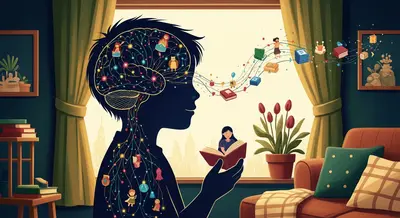
The Listening Brain: Why Hearing Stories Is Different
We live in an era that tends to associate learning with screens and text. But the spoken word has been humanity's primary learning technology for most of our existence. Cultures passed down their science, history, values, and wisdom entirely through the voice — through stories told aloud around fires, in fields, in boats, at bedsides.
The human brain, especially the developing brain of a child, is exquisitely well-designed to receive and process spoken narrative. Research in developmental psychology consistently shows that listening comprehension outpaces reading comprehension in children until around the age of twelve or thirteen. This means that for most of childhood, a child can access far richer, more complex, more vocabulary-dense stories through listening than through reading alone.
Audio stories do not just fill the gap while a child is developing as a reader. They actively build the very skills that reading requires.
For Auditory Learners: The Story Is the Sweet Spot
Some children are particularly attuned to sound. They remember things they have heard more readily than things they have read or seen. They pick up language quickly, love music, and often find that listening to instructions or explanations lands better than reading them.
For auditory learners, a well-narrated story is not just engaging — it is genuinely their preferred mode of learning. The pacing of a skilled narrator, the use of different voices for different characters, the rise and fall of tension in the telling — all of this gives auditory learners a rich web of cues to follow and remember.
What auditory learners gain from audio stories
- Vocabulary acquisition through context. Hearing a word used naturally in a story — with the right expression, in the right moment — is one of the most effective ways to acquire vocabulary. The emotional context creates memory.
- Prosody and fluency modeling. Listening to fluent, expressive reading teaches children how written language sounds when it is alive. This directly supports their own eventual reading fluency.
- Narrative retention. Auditory learners often remember story details, sequences, and characters with remarkable precision from audio experiences.
For Visual Learners: Imagination as the Screen
Here is a surprising truth about audio stories and visual learners: they are often among the most engaged listeners of all.
Visual learners process information primarily through imagery. When they read, they are creating pictures in their minds. When they watch a film, they are taking in visual information. But when they listen to a story without pictures, something remarkable happens: the imagination takes over completely. It becomes the screen.
A visual learner listening to a description of a mysterious forest, a cozy kitchen, or a dragon's hoard is not passively receiving. They are constructing — building an entire world in rich, personal visual detail. This is high-order cognitive work. It exercises creative visualization in a way that illustrated books and screens, which supply the images externally, simply cannot.
What visual learners gain from audio stories
- Active imagination engagement. With no pictures provided, the mind builds them — which is deeply satisfying for children who think in images.
- Greater personal connection to story. When your child imagines the character's face and the story's world, they make it their own. Their version is more vivid and more memorable than any external image could be.
- Improved creative visualization skills. Like any mental skill, visualization grows with practice. Regular audio story listening builds this capacity over time.
For Kinesthetic Learners: The Freedom to Move
Kinesthetic learners — children who learn best through movement, touch, and physical experience — often struggle in traditional sit-still-and-listen settings. They are the ones who need to fidget during read-aloud time, who tap their feet and fiddle with things, and who are sometimes mistakenly read as inattentive when they are, in fact, completely absorbed.
Audio stories are a quiet revelation for kinesthetic learners, because they remove the demand to sit still and look at a book. A child can listen to a story while:
- Drawing or coloring
- Building with blocks or construction toys
- Doing a puzzle
- Playing with playdough or clay
- Going for a walk or car ride
- Doing household chores alongside a parent
The story flows; the body moves; the mind absorbs. This is not distracted listening — for kinesthetic learners, it is often better listening than anything a sit-still environment could produce.
What kinesthetic learners gain from audio stories
- Access to stories without the physical constraint of stillness
- Multi-sensory learning — the ears are engaged while the hands and body are free
- Reduced anxiety around story time for children who have found traditional reading situations difficult
Universal Benefits: What Every Child Gains
While audio stories are particularly well-suited to specific learning styles, their benefits extend to every child who encounters them.
Listening comprehension
Comprehension — understanding what you have heard, tracking a narrative, following cause and effect, holding characters and events in working memory — is a foundational academic skill. Audio stories are one of the most enjoyable ways to build it.
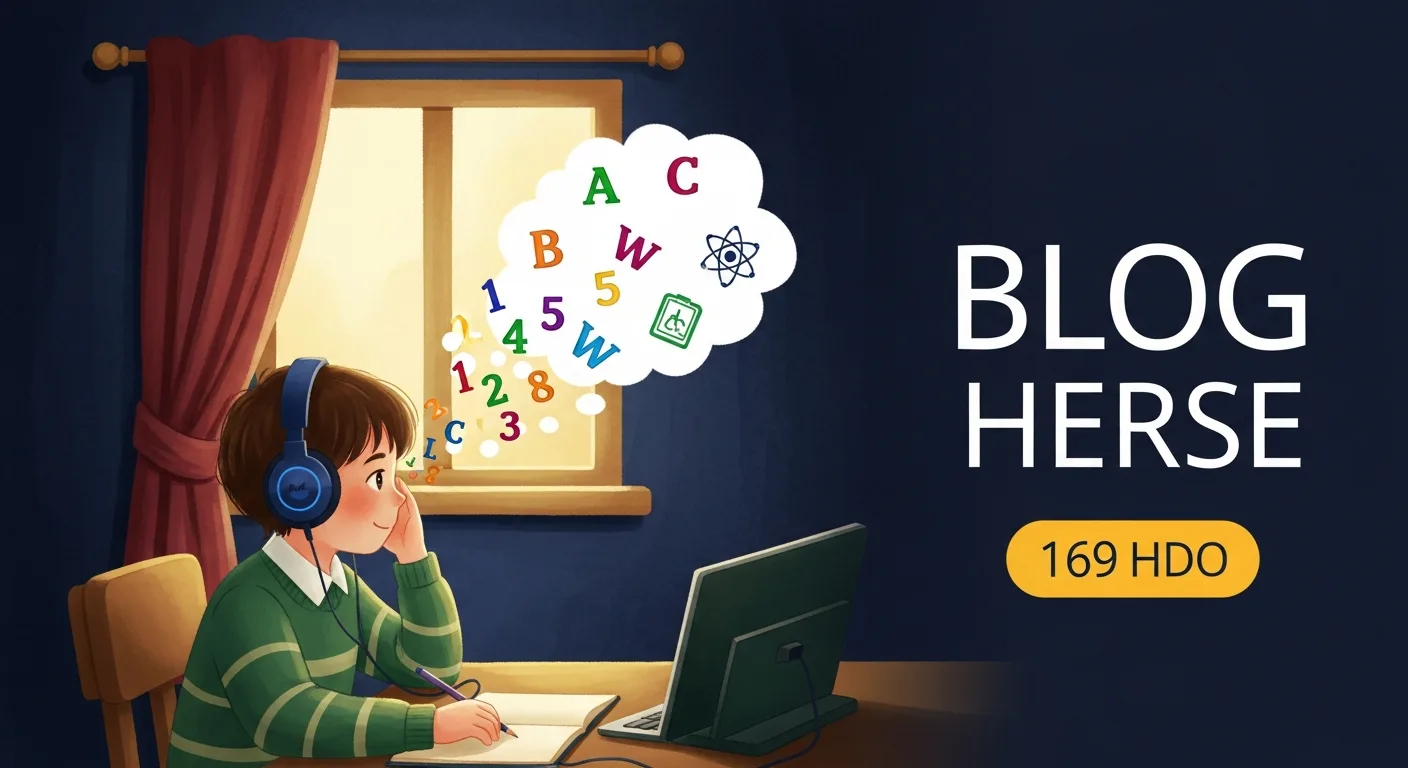
A child who regularly listens to stories develops the capacity to track complex information over time, hold multiple ideas in mind simultaneously, and make meaning from language. These are precisely the skills that support reading comprehension, mathematical problem-solving, and learning in every subject.
Vocabulary development
Children acquire vocabulary best when they encounter words in rich, meaningful contexts — where the meaning is at least partially clear from what is happening around it. Audio stories are densely packed with exactly this kind of vocabulary exposure. A well-crafted story for children will typically use a far wider range of vocabulary than everyday conversation.
Research suggests that children who listen to stories regularly develop measurably larger vocabularies than those who do not, and this advantage compounds over time.
Emotional intelligence and empathy
Listening to a character's inner life — their fears, their joys, their confusion, their courage — is a rehearsal for empathy. Audio stories strip away all other stimuli and ask the child simply to attend to another being's experience. This focused attention builds the same imaginative muscles that allow a child to wonder, in real life: "How might this feel to someone else?"
Screen-free, stress-free learning
In a world saturated with screens, audio stories offer something genuinely rare: rich cognitive engagement without a screen in sight. For families managing screen time, audio stories are a powerful option — they engage the imagination and support development without any of the concerns that surround visual media.
They also require nothing of the child except to listen. There is no performance, no right or wrong answer, no test at the end. This low-stakes engagement makes audio stories a wonderful tool for children who have developed anxiety or resistance around more formal learning situations.
Making the Most of Audio Stories: Practical Ideas
Here are some simple ways to bring audio storytelling more fully into your family's life:
Build it into transition times. Car journeys, the after-school wind-down, getting dressed, or tidying a bedroom are all natural moments to introduce an audio story. The activity gives restless bodies something to do while the story works on the mind.
Let your child choose. Children who feel ownership over their audio story experience are more engaged listeners. Offer a few options and let them lead.
Talk about it afterward — lightly. You do not need to quiz your child or turn the story into a lesson. A simple "What did you think of that bit?" or "I liked the part where..." is enough to extend the experience and deepen comprehension through conversation.
Use personalized audio stories. There is an extra layer of magic in an audio story that calls your child by their own name — one where the character navigating the adventure, meeting the dragon, discovering the treasure, is unmistakably them. For many children, this is the moment audio storytelling transforms from something they enjoy to something they treasure. Explore our personalized audio stories for kids to discover what this feels like for your little hero.
Follow their interests. An audio story about something your child already loves will always outperform an "educational" story they feel indifferent about. Start with what captivates them; the learning follows.
The Voice That Stays With Them
There is something about a voice — warm, expressive, unhurried — carrying a child into a story that no other medium quite replicates. It is the oldest kind of teaching there is, and it turns out it is also one of the most effective.
Whether your little hero is an auditory learner who drinks in sound, a visual learner whose imagination catches fire, or a kinesthetic child who processes the world through their body, a well-told audio story meets them where they are.
It always has. That is the whole point.
At OnceUponMe, every audio story is crafted to be heard — warm narration, vivid language, and your child's own name at the center of every adventure. Start your child's audio story today and let the listening begin.
Also reading: Storytelling Milestones: What to Expect from Ages 1–8 and The Benefits of Personalized Stories for Children.