How Stories Teach Children to Understand Emotions
Stories are one of the most powerful tools for building emotional intelligence in children—helping them name feelings, grow empathy, and navigate big emotions safely.
7 min read
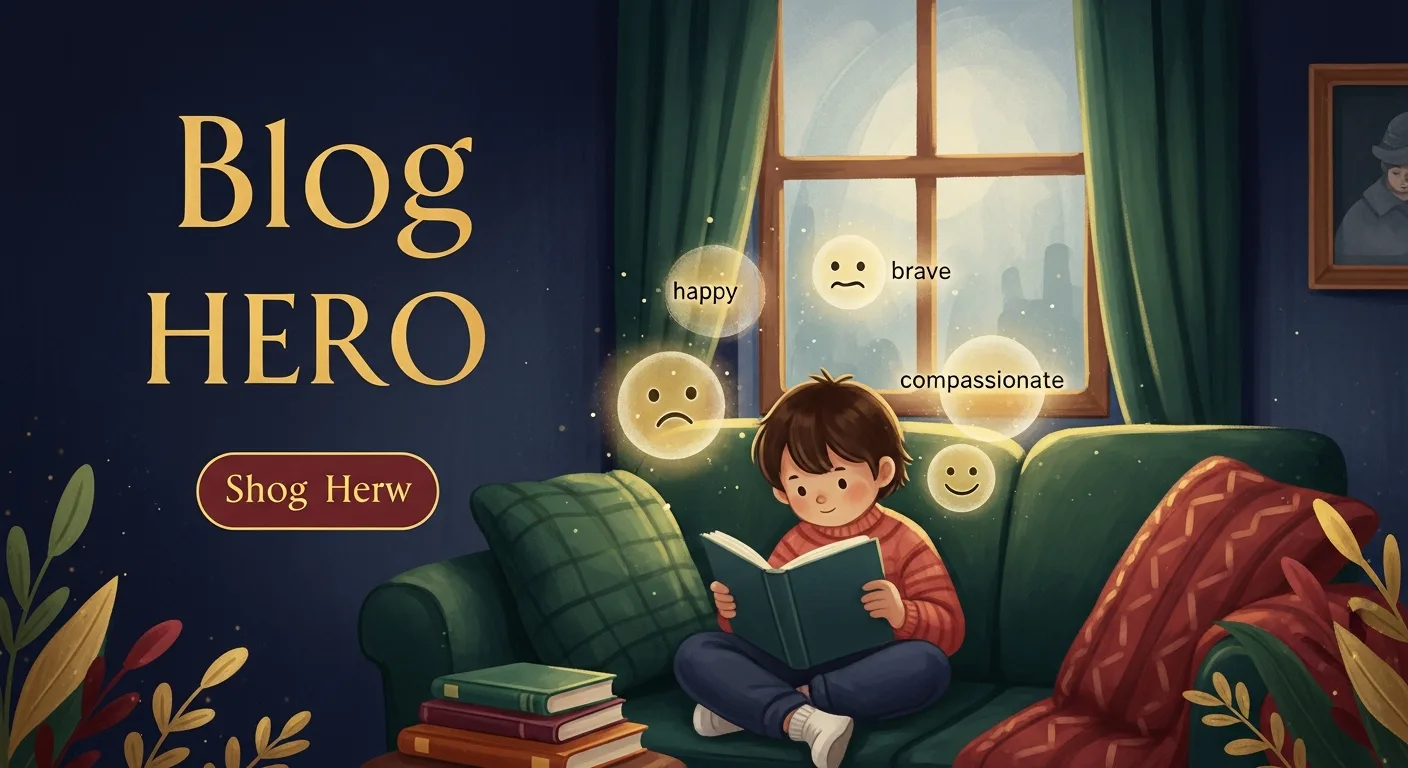
How Stories Teach Children to Understand Emotions
There is a reason children ask to hear the same story over and over again. Not always because it is funny, or because the pictures are beautiful, or because they like the way you do the giant's voice (though all of that helps). Often, they return to a story because something in it is helping them work something out.
The brave mouse who was terrified but went anyway. The little engine who failed before she succeeded. The child who felt left out, then found their place. Children return to these stories the way adults return to a favourite song after a hard day — because the story is doing emotional work that they cannot yet do alone.
Emotional intelligence — the ability to recognize, understand, manage, and respond to emotions, both in ourselves and in others — is one of the most powerful predictors of happiness, relationship quality, and success across a lifetime. And one of the most effective ways to build it, starting from the very earliest years, is through stories.
Here is how it works.
Naming the Feeling: Emotional Vocabulary Starts with Characters
Before a child can manage an emotion, they have to be able to name it. This sounds simple, but it is actually one of the great cognitive achievements of early childhood — and it does not happen automatically. Children need to hear emotions named, repeatedly, in contexts that make the meaning clear.
Stories are extraordinary vehicles for this.
When a character in a book is described as feeling jealous, a child encounters that word not as an abstract definition but as a lived experience. They see what jealousy looks like on a face, what it makes a character do, what caused it, and what happens because of it. The word arrives with a full emotional context attached.
Psychologists call this kind of learning situated cognition — understanding that is embedded in a real or imagined experience, rather than stripped of context. Words learned this way are words that stick. They become tools the child can actually use.
The Words That Open Doors
Research on emotional literacy consistently shows that children who have a rich emotional vocabulary — who can distinguish between "frustrated" and "furious," between "nervous" and "terrified," between "disappointed" and "heartbroken" — are better able to regulate their own emotions. The act of labelling a feeling, it turns out, literally reduces its intensity. Brain imaging studies show that putting a name to an emotion activates the prefrontal cortex and calms the amygdala — the part of the brain responsible for fight-or-flight responses.
In plain language: naming your feelings helps you manage them. And stories teach children to name their feelings.
The next time you read aloud with your little hero, try pausing at a moment of emotional charge and asking: What do you think [character] is feeling right now? Then go further: Have you ever felt that way? This simple practice is one of the most effective forms of emotional coaching a parent can offer.
Processing Big Feelings from a Safe Distance
Here is one of the most quietly powerful things about stories: they let children experience enormous feelings at a safe remove.
Grief, fear, rage, abandonment, failure — these are real experiences that real children face. But when a child is in the middle of their own fear or grief, the emotional intensity can be overwhelming. They cannot think clearly enough to process what they are feeling, understand it, or learn from it. The emotion is too close, too big, too now.
A story creates what therapists sometimes call therapeutic distance. The child is experiencing something real — they genuinely feel sad when the dog in the story dies, genuinely anxious when the hero is lost in the dark forest — but the experience is safely contained. It is happening to a character. The child can feel the feeling and still be okay.
Stories as Rehearsal for Reality
This is especially powerful for fears. A child who is anxious about starting school can, through stories, meet dozens of characters who were scared about starting school and came through it. The fear is not dismissed — it is honoured, witnessed, and then given a path through. A child who has seen a story character navigate the first day of school has a kind of emotional map they did not have before.
Stories can also gently introduce children to experiences they have not yet had but may face — the arrival of a sibling, the death of a grandparent, moving to a new home. A story encountered before the experience arrives is not a warning. It is a gift: a pre-built emotional framework that helps the child recognize and navigate what they are feeling when the time comes.
Empathy: Stepping Inside Someone Else's Story
Empathy — the ability to understand and share the feelings of another person — is not a fixed trait children either have or do not have. It is a skill, and like all skills, it develops with practice.
Stories are an empathy training ground.
Every time your little hero follows a character's interior experience — understanding why the villain made a terrible choice, feeling what the lonely child was feeling, recognizing the pride behind a character's boastfulness — they are practising the fundamental empathic act: stepping outside their own perspective and into another's.
This is not passive. The child's brain is actively constructing the character's inner world, making inferences, filling gaps, and checking those inferences against their own emotional knowledge. It is imagination and empathy working together, and it gets better with practice.
Characters Who Are Nothing Like Them
One of the most powerful empathy-building gifts stories can offer is characters who are genuinely different from the child — different in culture, in ability, in circumstance, in the choices they make. When a child empathizes with a character who does not share their background or experience, they are stretching their empathic range. They are learning that the inner life of someone very different from themselves is just as real, just as rich, just as deserving of understanding as their own.
This is one of the great moral gifts of literature, and it begins in the simplest picture books.
Stories as a Bridge to Emotional Coaching
Some of the most important conversations parents have with their children grow out of stories. And often, these conversations are possible because they are about a character — not about the child directly.
It can be very hard for a child to talk about their own fear, or anger, or sadness. The emotion feels too personal, too vulnerable. But they can talk freely about what a character was feeling, why, and whether it was reasonable. And in talking about the character, they are often quietly talking about themselves.
This is a technique that therapists use deliberately, and that storytelling makes naturally available to every parent.
Using Stories for Emotional Coaching: A Simple Practice
After reading a story with emotional content, try sitting with these questions:
- What was [character] feeling when that happened? This starts with observation and naming.
- Why do you think they felt that way? This builds causal thinking about emotions.
- Have you ever felt something like that? This gently bridges from character to child.
- What do you do when you feel that way? This opens a conversation about coping strategies.
You do not need to ask all four every time. Even one question, offered with genuine curiosity and no agenda, can open a remarkably rich conversation. The story has already done the emotional groundwork. You are just walking through the door it opened.
Personalized Stories and Emotional Recognition
There is an additional dimension worth noting here: when the story character shares your child's name, interests, and personality, emotional recognition deepens considerably.
Your little hero is far more likely to ask how would I feel in that situation? when the character in the story is, in some meaningful sense, them. The distance between character and self closes just enough to make the emotional experience more vivid — while remaining enough of a story to still feel safe.
Personalized stories allow children to see versions of themselves navigating hard feelings, making difficult choices, showing courage or kindness or resilience. These are not just entertaining tales. They are quiet, powerful messages about who your child is and who they can be.
At OnceUponMe, every story is crafted to reflect your child's unique world — because the most powerful stories are the ones that say, I see you, exactly as you are, and you are the hero.
The Long Game
Emotional intelligence is not built in a day, or a week, or even a year. It is built in thousands of small moments — a question asked over a picture book, a feeling named in a character, a quiet conversation at bedtime about what bravery really means.
Stories are the medium in which this building happens most naturally and most joyfully. They are the way human beings have always passed down emotional wisdom — from one generation to the next, in the intimate space of a shared tale.
So keep reading. Keep asking. Keep wondering together about what characters are feeling and why. Your little hero is not just hearing stories. They are learning the language of the heart.
Keep Exploring
- How Storytelling Shapes Your Child's Brain: A Parent's Guide — the neuroscience behind why stories are so powerful
- Reading Aloud to Your Child: Benefits at Every Age — how the benefits of read-alouds shift as your child grows
- Why Storytelling Builds Vocabulary Faster Than Flashcards — because emotional words are vocabulary too
Stories that reflect your child's world help them understand their feelings and see themselves as capable, courageous, and kind. At OnceUponMe, we write personalized adventures for your little hero — told in a voice that feels like it was made just for them. Start your story today.