Reading Together: The Simplest Way to Bond with Your Child
Discover why reading together is one of the most powerful ways to bond with your child—and how to make it a joyful family tradition at every age.
7 min read
Reading Together: The Simplest Way to Bond with Your Child
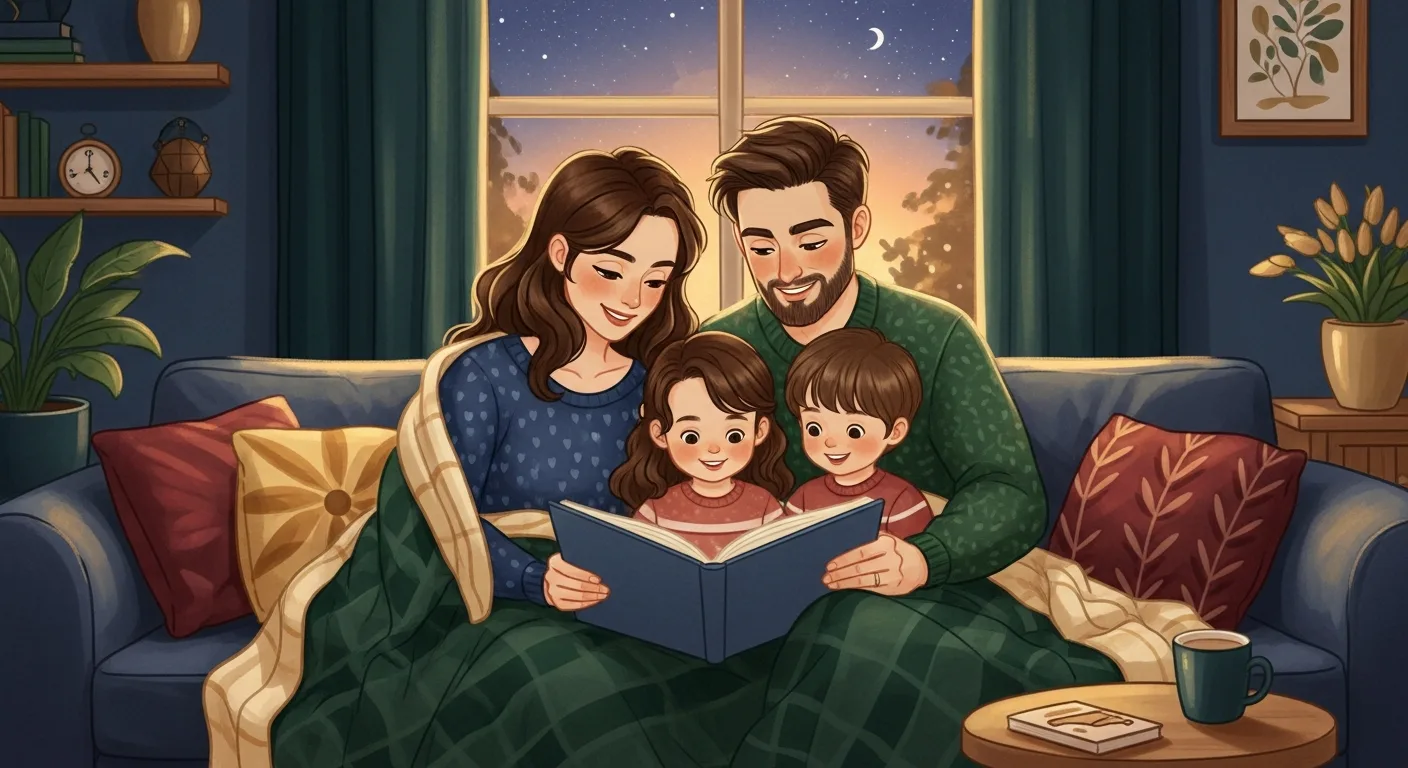
There is a particular kind of quiet that settles over a house when a parent and child are reading together. The world outside can be as loud as it likes—the dishes still in the sink, the notifications pinging softly on a phone somewhere—but inside that small circle of lamplight and shared pages, none of it quite reaches you. It is just the two of you, and a story.
That moment is not accidental. It is one of the most powerful things you can do for your relationship with your child, and the science has been catching up with what parents have sensed for generations: reading together is, quite simply, one of the best ways to bond with the little person you love most.
What Happens When You Read Together
Your Brains Sync Up
Researchers at Princeton University discovered something remarkable a few years ago: when two people communicate—really communicate, sharing a story, building meaning together—their brain activity begins to mirror each other. The listener's brain patterns start to look like the speaker's. They called it "neural coupling," and it is the neurological heartbeat of genuine connection.
Reading aloud is one of the purest forms of this exchange. Your voice, your pacing, the way you pause before the scary part or do a funny accent for the villain—all of it draws your child into a shared mental space. Their brain is literally patterning itself against yours. That is intimacy, built one page at a time.
It Lowers Stress (For Both of You)
Reading together is not just emotionally connecting—it is physiologically calming. Studies show that reading reduces cortisol levels, the stress hormone that accumulates in busy, overstimulated kids and adults alike. When you settle in together with a book, you are not just enjoying a story. You are both physiologically downshifting. Heart rates slow. Breathing deepens. The nervous system takes a breath.
In a world where family life can feel like an endless sequence of logistics, that shared decompression is genuinely precious.
It Builds Attachment Through Ritual
Attachment theory tells us that children thrive on predictable, warm interactions with their caregivers. A daily reading ritual—same time, same cozy spot, same beloved book—is one of the most natural attachment-building practices a family can build. It signals to your child, without a single word about love or security: I will always show up for this. You can count on me.
That reliability, woven into something as simple and joyful as a story, does more for a child's sense of security than almost anything else.
Reading Together at Every Age
One of the most beautiful things about shared reading is that it never really stops working, even if the form changes.
Babies and Toddlers (0–3)
Long before your little one understands the plot of a single story, they understand you. They hear your voice rise and fall. They watch your face light up at the colorful page. They feel the warmth of being held close while the world narrows to just this book, just this moment.
Board books with bold pictures and rhyming sounds are perfect here. It does not matter if they chew the corner. They are learning that books are safe, happy places—and that you are the person who brings them there.
Early Readers (4–7)
This is the golden age of read-aloud, and if you have a child in this window, lean into it with everything you have. Your child is old enough to follow a narrative, to wonder what happens next, to feel genuinely worried about the main character. But they can still hear stories that are far richer and more complex than anything they could read alone.
This is where the magic of personalized stories can do something extraordinary. When the hero of the tale has your child's name—when the adventurer climbing the enchanted mountain is them—the story stops being abstract and becomes viscerally real. You will see it in their eyes. Read our piece on personalized bedtime stories to explore what that transformation can look like.
Middle Childhood (8–12)
Children this age are increasingly independent readers, and well-meaning parents sometimes assume the read-aloud chapter is over. It is not. Family read-alouds of longer chapter books—adventures, mysteries, funny series—are deeply bonding at this age. The difference is that now your child can speculate alongside you about the plot, disagree with you about characters, and feel genuinely proud when they catch something you missed.
These conversations are some of the best you will have. The story gives you a safe space to explore difficult emotions, moral questions, and big ideas without it ever feeling like a lecture.
Teenagers
Yes, really. Teenagers can feel awkward about the old rituals—reading together might need a new shape. A shared audiobook on a long drive. A book club for two, where you each read the same novel and then talk about it. Even recommending books to each other and debriefing over dinner counts as shared reading. What matters is that you are still using stories as a bridge.
How to Build a Family Reading Tradition
Choose a Consistent Time
Bedtime is the classic for good reason: it is a natural pause, it signals wind-down, and it leverages a child's desire to delay sleep into something genuinely enriching. But if bedtime is chaotic in your house, do not force it. After-school snack time, Saturday mornings, or a quiet hour after dinner work just as well.
The key is consistency. A 10-minute reading ritual that happens every day will do more for your relationship than a two-hour reading session that happens once a month.
Create a Reading Nest
You do not need a library. You need a cozy spot. A particular corner of the sofa, a pile of cushions in a bedroom, a reading nook built from a bookshelf and a curtain—what matters is that it is theirs, recognizable, and associated with safety and warmth. Over time, just settling into that spot will signal to both of you: story time is here.
Let Your Child Lead (Sometimes)
Reading together should never feel like medicine. On nights when your little hero is desperate for a particular favorite—the one you have both read forty-seven times—let them have it. Repetition is not a failure of variety; it is a sign that a story has truly taken root. They are processing it, living inside it, making it part of themselves.
On other nights, take your turn to choose. That is how you gently expand their world without it ever feeling like homework.
Talk About What You Read
The conversation that follows a story is where so much of the bonding happens. Not a quiz—just wondering aloud together. Why do you think she did that? What would you have done? Was that scary or exciting—or both? These questions invite your child into genuine intellectual partnership with you. You are not their teacher in those moments. You are their companion, figuring out the same story from slightly different angles.
When Life Gets in the Way
There will be nights when nobody has the energy. When the book goes unread and everyone collapses into sleep. When a week goes by in a blur of illness or travel or work stress, and the ritual falls apart.
That is okay. Traditions do not shatter; they bend. The important thing is the return. Pick up the book again the next night, or the night after. Your child will remember that you came back, not that you missed a few nights.
And on the nights when you genuinely cannot do a physical book—when you are traveling or the house is upside down—a personalized story read aloud on a device can carry the same warmth. The voice, the closeness, the shared attention: those are the real ingredients. The format is just the vessel.
The Story You Are Really Telling
Every time you read together, you are telling your child a story that has nothing to do with the words on the page. You are telling them: You are worth my full attention. This time is sacred. Stories matter. You matter.
Children absorb these messages in the quietest, deepest way. They do not analyze them or file them away consciously. They simply grow up knowing them, the way they know that home is warm and that you will always come back.
That is the real gift of reading together—not the vocabulary, not the literacy scores (though those are real, too). It is the unspoken story of a parent and child, side by side in the lamplight, building a world together one page at a time.
Ready to make story time even more magical? At OnceUponMe.com, every story stars your little hero by name—turning a bedtime book into a personal adventure they will treasure. Come find the story that is waiting just for them.